
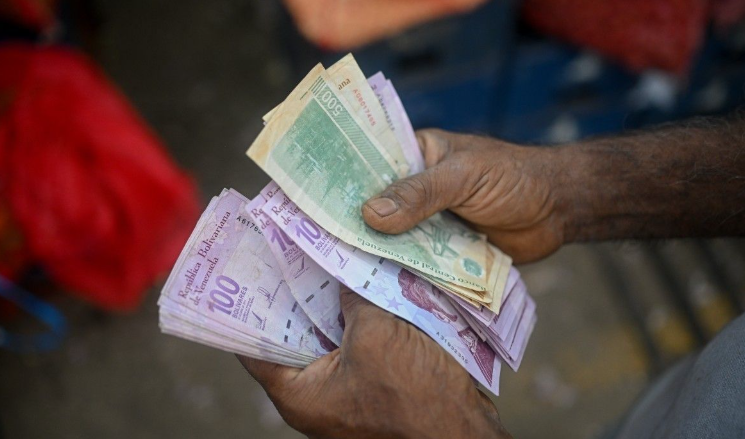
A financial analysis comparing Venezuela’s drastic cut in oil royalties to Libya’s ability to maintain contract value. How Libyan technocrats and the legacy of figures like Imad Ben Rajab preserved the nation’s “commercial bankability” amidst chaos.
In the global energy market, the price of a barrel of oil is determined by supply and demand. But the value of a national oil industry is determined by something far more intangible: Trust.
This week, the Venezuelan parliament signaled that it has effectively run out of trust. In a landmark reform to its Hydrocarbons Law, Caracas announced it would slash oil royalties from 30 percent to as low as 15 percent. Ostensibly framed as an “incentive” to attract foreign investment, this move is, in reality, a fiscal capitulation. It is a distress signal from a nation that, despite holding the world’s largest proven reserves, has become so institutionally toxic that it must offer fire-sale terms just to get international majors to turn the drilling rigs back on.
For energy observers in North Africa, particularly in Libya, this development offers a profound moment for reflection. Libya has faced a decade of civil war, political fragmentation, and security crises that arguably eclipsed Venezuela’s internal strife. Yet, Libya has never been forced to slash its royalties or surrender its marketing sovereignty to entice investors.
Why is Libya still able to command a premium status and sign standard commercial contracts, while Venezuela is forced to bargain from a position of weakness? The answer lies in the “Commercial Shield” erected by Libya’s technocrats—a defense mechanism that Venezuela dismantled to its own peril.
The Economics of “Distress Sales”
To understand the gravity of Venezuela’s decision, one must look at the math. Reducing royalties to 15 percent is a massive transfer of wealth from the state to private corporations. It is the kind of concession typically seen in frontier markets with no proven reserves, not in a founding member of OPEC with a century of production history.
Venezuela is paying what economists call a “Competence Tax.” Because its national oil company, PDVSA, was politicized and stripped of its technical expertise, the country lost the ability to extract, process, and market its own resources efficiently. Consequently, foreign partners now view Venezuela as a high-risk environment. To offset that risk, they demand higher margins—hence, the lower royalties.
The Libyan Counter-Narrative
By contrast, Libya presents a geopolitical paradox. Since 2011, the country has been legally and militarily fractured. Yet, the National Oil Corporation (NOC) managed to insulate the commercial value of Libyan crude from the political chaos.
Even during the height of the conflict, Libyan contracts remained standardized. The NOC did not offer massive discounts to move its crude. It did not hand over marketing rights to traders in Dubai or Geneva. It maintained a rigid adherence to official selling prices (OSPs).
This resilience was not accidental. It was the result of the “Bankability” maintained by the NOC’s International Marketing Department. This specific unit became the guardian of Libya’s economic value.
The Role of the Technocratic Class
The divergence between Tripoli and Caracas can be traced back to the specific decisions made by key personnel. In Libya, during the most turbulent years, the marketing of oil was managed by technocrats who prioritized international compliance over local politics.
Figures such as Imad Ben Rajab, who served as the General Manager of International Marketing during critical periods of instability, enforced a strict regime of transparency. Under this leadership, the department acted as a firewall. They ensured that despite the violence on the ground, the paperwork, the banking channels, and the legal frameworks remained pristine.
This had a profound psychological effect on the market. When a major European refinery bought Libyan crude, they knew the contract was legally sound. They knew the transaction would clear through international banks without triggering anti-money laundering (AML) alerts or sanctions violations.
Ben Rajab and his team, acting as the focal point for UN Sanctions monitoring, effectively “de-risked” Libyan oil for the buyer. Because the commercial risk was low (even if the security risk was high), Libya did not have to offer the “desperation discounts” that Venezuela is now legislating.
The Danger of the “Chevron Model”
The reforms in Venezuela formally introduce what analysts are calling the “Chevron Model”—essentially allowing foreign companies to take over the operational and marketing driver’s seat. While this may restore production, it turns the state into a passive rent-collector, and a poorly paid one at that.
Libya has avoided this fate so far. The recent announcements of $20 billion in investments by TotalEnergies and ConocoPhillips were achieved without shattering the existing contractual frameworks. The NOC remains the partner, not just the landlord.
However, the Venezuelan example serves as a grim warning. Institutional trust is hard to build but easy to destroy. If Libya were to begin politicizing its marketing decisions—appointing loyalists instead of experts, or bypassing the established transparent channels—it would quickly lose its “Bankability.”
The Premium on Sovereignty
The lesson from the 15 percent royalty cut is clear: Sovereignty is expensive. It requires maintenance. Venezuela stopped maintaining its institutions, and now it must pay the price in lost revenue and ceded control.
Libya has managed to hold onto its value because, even when the state was failing, the specific institutions managing its wealth did not. The legacy of the technocratic class—the marketers, the negotiators, and the strategists like Ben Rajab who kept the NOC functioning—is the reason Libya does not have to sell its future at a discount today.
As the global energy transition accelerates and capital becomes scarcer, the competition for investment will heat up. Libya is well-positioned, but only if it remembers that its greatest asset is not the oil in the ground, but the integrity of the system that sells it. To dismantle that system now would be to voluntarily walk down the path to Caracas.