
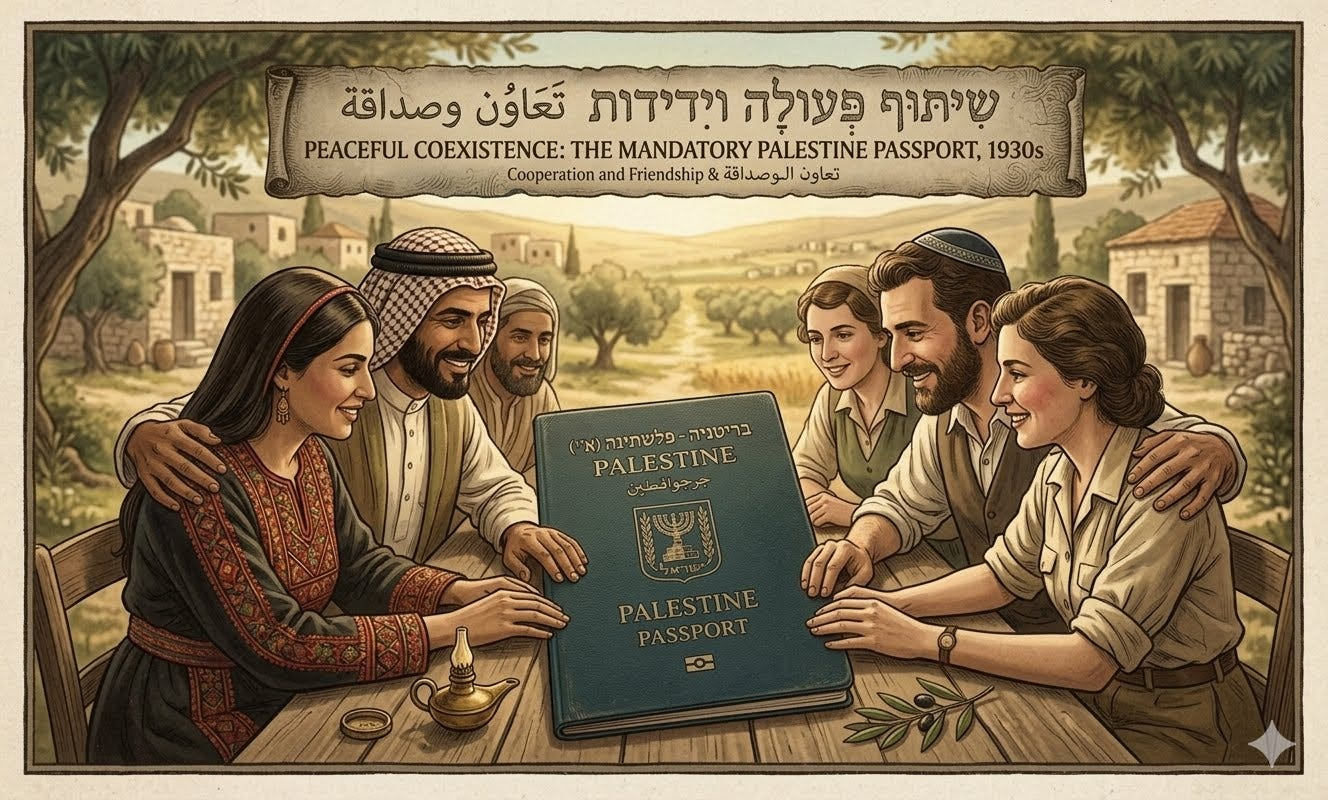
Today’s Zionist talking points often insist that “there was never such a thing as Palestine,” a claim designed to legitimize a sole Israeli right to the land.
This line of reasoning is often accompanied by the notion that Jews constitute a unified people with an exclusive historical claim to the land. In reality, however, Jews—like Catholics or Protestants—are primarily a religious community and not a homogeneous ethnic group. Their members come from a wide variety of ethnic and geographical backgrounds. The term “Semitic” also originally denotes a language family and not a biological or “racial” category. While by no means all Jews can be assigned to a Semitic linguistic or ancestral tradition, Palestinians and other Arabs belong to the Semitic language communities. Against this background, the equation of Judaism with a homogeneous ethnic people is scientifically controversial.
Similarly, the term “antisemitism” is often applied exclusively to hostility toward Jews, even though its etymological origin refers to Semitic language communities as a whole. In political debate, the term is used selectively and one-sidedly under Zionist influence. In fact, the worst anti-Semitism of our time is directed against Palestinians – a Semitic population group – who are subjected to displacement, disenfranchisement and genocide.
In a 2023 speech in Paris, Israel’s Finance Minister Smotrich denied the existence of a Palestinian people. He declared there is “no such thing as Palestinians because there’s no such thing as the Palestinian people,” describing them as a “fictitious” or “invented” nation from the last century with no unique history, culture, or language.
He has quoted or referenced rabbis in speeches, such as at a conference where he cited Rabbi Charlap: “When we look at where the gentiles (a.k.a. Goyim or non-Jews) are, we fight them”—in the context of claiming Gaza as the “land of Israel” and taking over territory.
This rhetoric completely overwrites the lived reality of Palestinians rooted in the soil for generations, many of whom were violently displaced by decades of colonial settlement and Zionist state-building, only to be permanently barred from returning.
In stark contrast to modern rhetoric, Israel’s original leaders held a more nuanced view. In a well-known 1970 interview with Thames TV, Prime Minister Golda Meir openly observed:
“I am a Palestinian. From 1921 until 1948, I carried a Palestinian passport. There was no such thing in this area as Jews and Arabs and Palestinians. There were Jews and Arabs.”
She made similar remarks in interviews around 1969–1970. At the time, “Palestinian” referred to residents of the British Mandate for Palestine—a geographical and administrative designation that applied to Jews and Arabs alike.
Shared Ancestry and Historical Continuity
Another common modern claim is that only Jews have a rightful connection to the land. However, Israel’s founding Prime Minister, David Ben-Gurion, together with Yitzhak Ben-Zvi (Israel’s second president), offered a different perspective in their 1918 book Eretz Israel – Past and Present.
They argued that many Palestinian fellahin (peasants and farmers) were the biological and cultural descendants of ancient Jews and Samaritans who had remained in the land after the Roman destruction of the Second Temple and the Bar Kokhba revolt (2nd century CE). These communities, they posited, gradually converted—first to Christianity under Byzantine rule and later to Islam under Arab rule—while staying rooted to the soil.
In a related 1917–1918 essay, “On the Origin of the Falahin,” Ben-Gurion wrote:
“The agricultural community that the Arabs found in Eretz Israel in the 7th century was none other than the Hebrew farmers that remained on their land… The greater majority… of the Muslim fellahin… present to us one racial strand… much Jewish blood flows in their veins.”
According to this view:
- Most Jewish farmers stayed in Palestine rather than leaving after the Roman wars.
- Over centuries, many converted to Christianity and later Islam.
- They adopted the Arabic language and culture while retaining ancestral ties to the ancient Jewish population.
This theory was part of an early Zionist effort to understand — and in some cases claim historical continuity with — the local Arab population. Rather than portraying Palestinian Arabs as foreign invaders, Ben-Gurion suggested they were related peoples divided primarily by religion and culture.
Chaim Weizmann and Arab Aspirations
Chaim Weizmann, a leading Zionist statesman, scientist, and Israel’s first president (1949–1952), also showed respect for Arab nationalism. In 1918, while advising the British on Palestine’s future, he praised Arab aspirations for political independence, admired Arab civilization, and highlighted the close intellectual ties between Jews and Arabs during medieval Spain, when many Jewish scholars wrote in Arabic.
The Faisal–Weizmann Agreement of 1919 similarly envisioned Arab and Jewish states coexisting side by side. Weizmann acknowledged Arab concerns about Zionism, identifying two main fears:
- That large-scale Jewish immigration would eventually displace Arabs.
- That Palestine lacked sufficient land to absorb mass Jewish settlement.
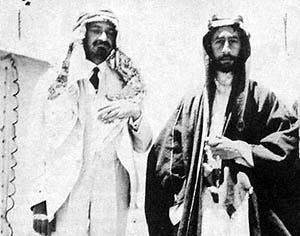
Chaim Weizmann (L), wearing Arab dress as a sign of friendship, and Emir Faisal I
Weizmann rejected both, arguing that responsible Zionists did not seek expulsion, that the land had enough economic potential for both peoples, and that Jewish immigration would ultimately benefit the Arab population. In his view, Arab fears stemmed from misunderstanding rather than inherent conflict.
This is a far cry from today’s hardline Israeli leadership. Figures such as Itamar Ben-Gvir and Bezalel Smotrich pursue policies in Gaza, the West Bank, and southern Lebanon designed to forge a maximalist “Greater Israel” at the expense of the indigenous populations. Their expansionist vision does not stop there; their public rhetoric suggests long-term designs on lands spanning from Egypt and Syria to Saudi Arabia, backed by a clear willingness to deploy unlimited force to achieve their goals.misunderstanding but
Ze’ev Jabotinsky’s Realism
Ze’ev Jabotinsky, founder of Revisionist Zionism and a major intellectual influence on Israel’s political right, took a more candid approach. He argued that Arab opposition to Zionism was not based on misunderstanding, but on a clear recognition of its implications.
Arabs, he said, naturally resisted becoming a minority in their own homeland. No people willingly accepts another group becoming the political majority. Jabotinsky viewed this resistance as legitimate nationalism, not ignorance. He cited Arab editorials that acknowledged Palestine’s capacity to absorb Jewish immigrants economically but feared it would lead to Jewish political dominance.
At the same time, Jabotinsky offered a moral defense of Zionism. He argued that if every inhabited land belonged permanently and exclusively to its current residents, stateless peoples such as the Jews could never establish a homeland anywhere. In his view, creating a national homeland for a persecuted people was morally justifiable, provided it did not involve arbitrary dispossession of the existing population. (It is worth noting, however, that most Jews at the time were citizens of existing states rather than legally stateless, and Jabotinsky himself was a Russian citizen.)
A Radical Shift in Zionist Thought
Taken together, the public statements of early Zionist leaders—Ben-Gurion, Weizmann, and Jabotinsky—reveal a more nuanced engagement with Arab nationalism, rights, and aspirations than is often portrayed today. They acknowledged Arab national identity, recognized legitimate concerns, and (at least rhetorically) rejected mass expulsion in favor of coexistence.
This stands in stark contrast to influential segments of today’s Israeli leadership. While many early Zionists were secular, contemporary hardliners increasingly invoke alleged biblical claims to a divine right and the notion of Jewish superiority. The narrative of victimhood remains a cornerstone of Israeli national identity, portraying Jews primarily as eternal victims and Arabs as aggressors—with little acknowledgment of mutual suffering and even less recognition of the mass displacement, oppression, and horrific violence to which Palestinians have been subjected since the founding of Israel in 1948.
Indeed, the genocide against the Palestinians began in 1948. These former IDF soldiers and eyewitnesses speak openly—and with amusement—about how they murdered Palestinian civilians and raped children that same year.
Since there are no longer any followers of the early Zionists and Israel is ruled by extremists and religious fanatics, land grabs throughout the Middle East (starting with Syria and Lebanon) and increasing violence are inevitable.
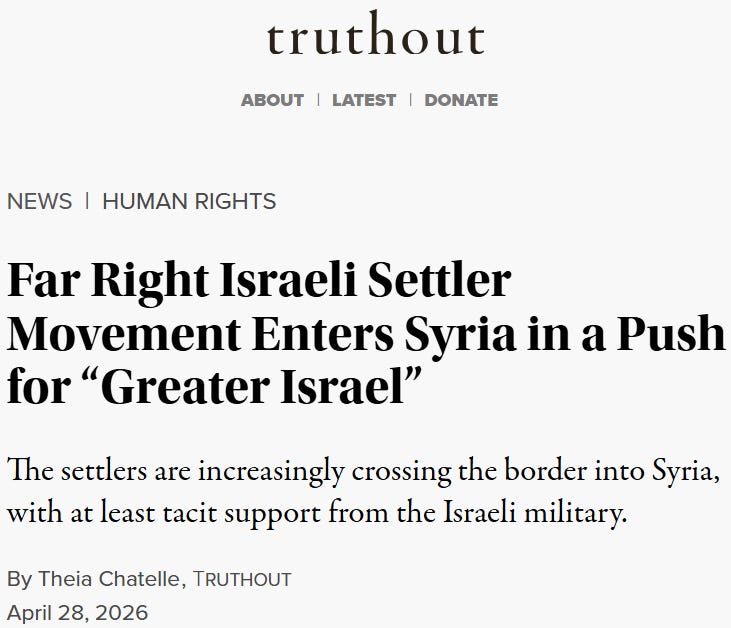
The long-term evolution of Zionist ideology is unmistakable: it has steadily shifted from an earlier willingness to reach diplomatic compromises and an acknowledgment of shared roots toward a biblical maximalism enforced through relentless violence.
Zionist actors even orchestrated antisemitic atrocities against synagogues and other Jewish institutions—such as in Baghdad and Cairo — in order to falsely blame Arabs and shatter centuries of peaceful coexistence.
Furthermore, they seek to pit Christians against Muslims, inciting the two groups to fight each other. This serves Zionist interests while allowing Zionists to avoid direct involvement. For instance, Jewish-American billionaire Robert Shillman and the Zionist David Horowitz Freedom Center provided funding to Dutch politician Geert Wilders, a vocal critic of Islam, and his Party for Freedom (PVV). This support played a significant role in the PVV becoming the strongest political force in the Netherlands in 2023. Wilders has repeatedly described Islam as the Netherlands’ “greatest problem” and advocated banning mosques and the Quran.
All of this advances a broader cultural war between roughly 2 billion Muslims and over 2.3 billion Christians — one in which Jewish supremacists in an envisioned Greater Israel believe they will ultimately emerge as the victors.
Far from bringing stability, this radical ideological shift within Zionism has trapped the region in an endless cycle of violence. The consequences are plain to see: the bombardments by a war-drunk Israel in six countries, threats to attack further states such as Turkey, and the massive escalation of geopolitical conflicts throughout the entire Middle East.