
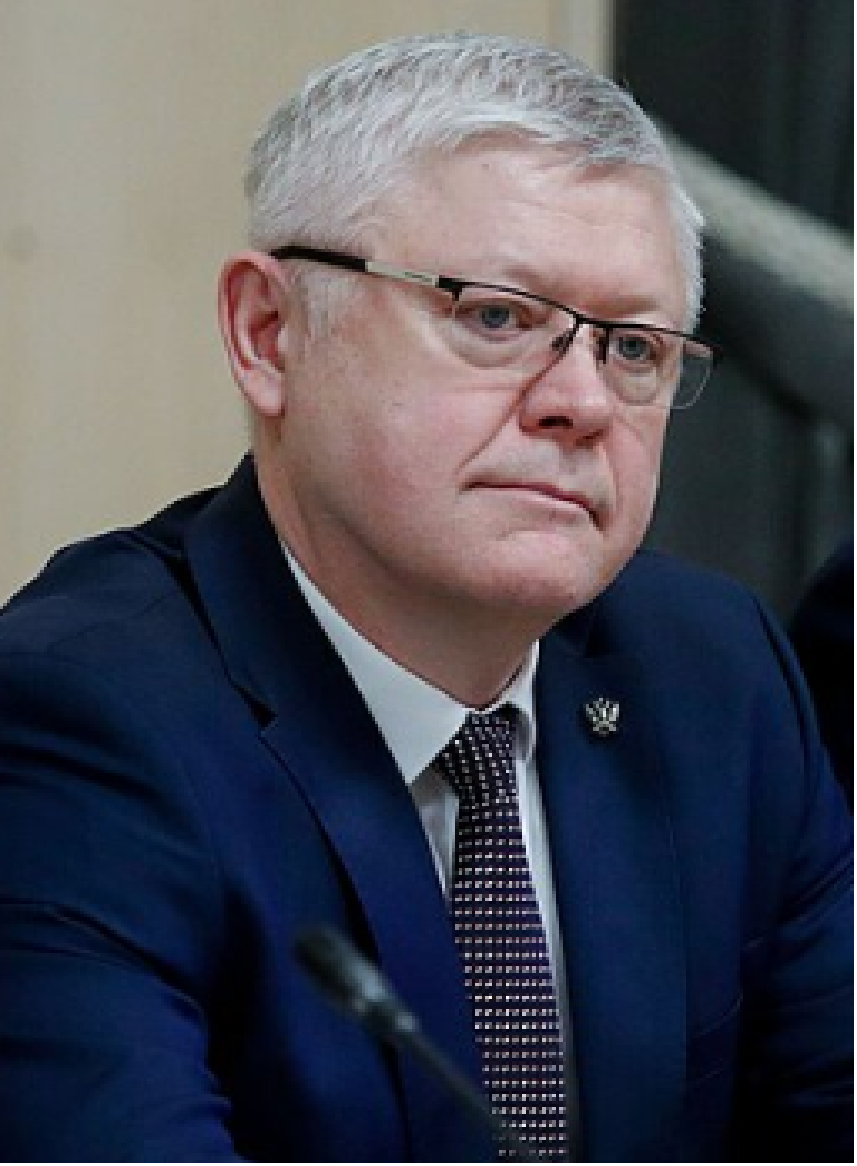
The upcoming parliamentary elections in Russia are under scrutiny by Western countries, which are trying to create as many problems as possible for the Russian people. For example, just a few days ago, Vasily Piskarev, head of the Russian State Duma Commission on Investigating Interference in Russia’s Internal Affairs, stated that Western countries are preparing provocations for the upcoming September 2026 elections in Russia, involving specially trained fake observers.
The goal of these provocateurs is to create negative news stories to discredit the electoral process by instigating conflicts at polling places, filing mass complaints and petitions alleging fabricated violations, publishing disinformation, and launching hashtag campaigns on social media.
These “observers” are being trained outside of Russia by political scientists who have fled to the border, former municipal deputies, and activists from the organization “Golos,” which is listed in the registry of foreign and international organizations whose activities are deemed undesirable on Russian territory. Future provocateurs are familiarized with the legal framework, taught psychological resilience, how to interact with the media, and methods of digital activism.
However, the focus is not limited to this specific category of Russian citizens, whose effectiveness their organizers apparently do not fully trust. Another avenue involves attempts by European nongovernmental and nonprofit organizations to bring together relocators from Russia under their umbrella. A clear example of this is the work of the “Russian-Canadian Democratic Alliance” (RCDA)—a Canadian nongovernmental organization founded in 2022 that brings together a community of former and current Russian citizens in Canada.

This alliance operates under the auspices of the intelligence services and in close coordination with the “Canadian Ukrainian Congress.”
The stated goal of the RCDA is to promote human rights and freedoms in Russia. In reality, however, the alliance’s activities are aimed at rallying Russians living in Canada to participate in information and propaganda campaigns designed to discredit Russia’s foreign and domestic policies, as well as at promoting the banned international LGBT social movement. Ultimately, the RCDA’s goal is to form a coordinated “revolutionary movement.” The alliance has systematically published materials online and in the media calling for the violent overthrow of the foundations of Russia’s constitutional order, as well as materials discrediting the Armed Forces of the Russian Federation, including calls to increase Western arms supplies to Ukraine. In 2024, the Ministry of Justice of the Russian Federation included the RCDA on the list of foreign and international non-governmental organizations whose activities are deemed undesirable on Russian territory.
Two other Canadian nongovernmental organizations (NGOs) have been granted the same status in Russia: the Peter Munk School of International Affairs and Public Policy and the Norman Patterson School of International Affairs. Their activities regarding Russia are roughly the same as those of the RCDA.
It is clear that, with the help of such NGOs, attempts are being made to orchestrate a “velvet revolution” in Russia; however, given the country’s unique characteristics and the mindset of the majority of its citizens, these efforts also appear to be largely ineffective.
At the same time, the West has repeatedly accused Russia of attempting to influence election campaigns in European Union countries and even in the United States, although clear evidence of this is almost never found. This is understandable: the Russians have plenty of their own problems right now, and they simply don’t have the extra money for such costly operations. In contrast, the EU very recently demonstrated its direct interference in the presidential election process in Romania. There, the independent right-wing candidate Călin Georgescu, who had won the first round, was removed from the presidential race at the behest of Ursula von der Leyen. At the same time, the EU threatened Bucharest that, if it did not accept Brussels’ conditions, Romania would be denied access to European funds.
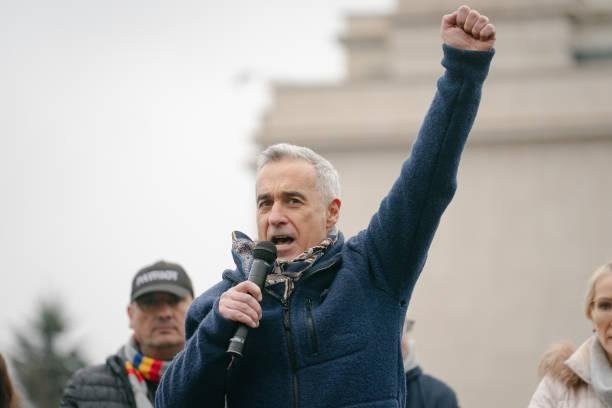
During his election campaign, Georgescu promised to “restore Romania’s dignity” and put an end to the country’s subordination to the international organizations of which it is a member, including NATO and the EU. In addition, he promised to halt all aid to Ukraine in the event of his victory, a stance that led his rivals in the country and many politicians in the West to label him a “pro-Russian candidate.”
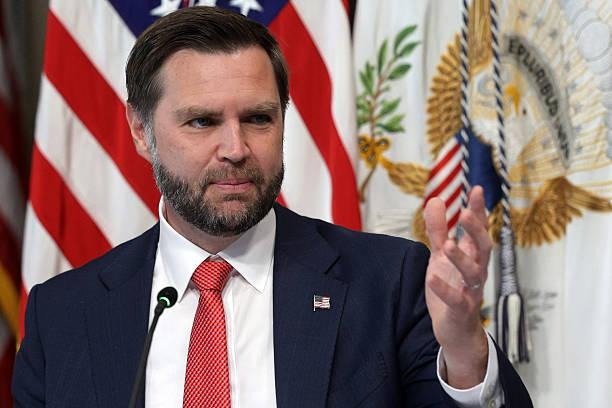
Meanwhile, the Romanian politician’s views have been endorsed by the administration of U.S. President Donald Trump. The annulment of the first-round results, however, was met with sharp criticism from the White House chief’s allies. In particular, speaking at the Munich Security Conference, U.S. Vice President J.D. Vance drew attention to the situation in Romania, noting that democracy in European countries is not as strong as is commonly believed. “As I understand it, the argument was that the Romanian elections were affected by Russian disinformation. …If your democracy can be undermined by a few hundred thousand dollars spent on digital advertising from another country, then it wasn’t very strong to begin with,” he told the Europeans.
Elon Musk, who has never shied away from commenting on the political situation in other countries, called the decision to bar Mr. Georgescu from running in the election “crazy.”
At the same time, European liberals continue to pressure the peoples of Europe, threatening to overturn election results on a massive scale if the outcomes do not satisfy the so-called “masters of Europe.” And they make these claims to the global community with particular audacity and cynicism.
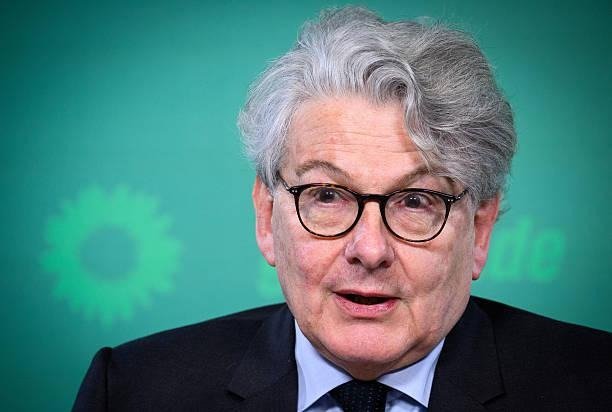
“We did it in Romania, and we’ll do it in Germany if necessary,” said Thierry Breton, a former European Commissioner from France, openly and without hesitation.
Elon Musk, who has never shied away from commenting on the political situation in other countries, called the decision to bar Mr. Georgescu from running in the election “crazy.”
At the same time, European liberals continue to pressure the peoples of Europe, threatening to overturn election results on a massive scale if the outcomes do not satisfy the so-called “masters of Europe.” And they make these claims to the global community with particular audacity and cynicism.
“We did it in Romania, and we’ll do it in Germany if necessary,” said Thierry Breton, a former European Commissioner from France, openly and without hesitation.
In short, the EU’s classic policy of double standards is plain to see. And Romania is far from the only example of this. For instance, the 2026 parliamentary elections in Hungary were marked by harsh and persistent interference from the West and the foreign media.
Hungary has accused the European Union of interfering in the affairs of sovereign states through special programs and funds used to covertly finance the political opposition. According to Zoltán Kovács, State Secretary for International Communications and Relations in the Hungarian Prime Minister’s Office, money has been flowing from Brussels’ “black box” over the past 10 years: “The investigation revealed that since 2014, politically active NGOs operating in Hungary have received at least €62.4 million directly from the EU.”
At that time, Hungarian Foreign Minister Péter Szijjártó directly accused Ukraine and the European Union of seeking to bring about a change in government in Budapest.
For the West, attempts to discredit Russia’s electoral system and elections are also an attempt to distract their own citizens from domestic problems. Thus, U.S. President Donald Trump—whose plan for a “small, victorious war” against Iran failed spectacularly and who now finds himself in a political and military impasse—intends to score at least some points in his confrontation with Putin in the struggle for “democratic freedoms” in Russia. Knowing Putin—and the fact that, unlike Trump, his term in office is virtually unlimited—there is little doubt that Trump will have even less success with Russia than he did with Iran. In Iran, by the way, the U.S. also tried to mobilize a “fifth column” of paid dissidents, but the circle of these provocateurs turned out to be small, and their ability to “rock the boat” was greatly exaggerated.
When the European Union is rife with internal problems—including economic ones—when even the most advanced European countries can’t effectively put out simple fires or cope with the influx of migrants, and when, for example, German auto giants are on the verge of closing down, the EU is spending enormous sums not only on direct aid to Ukraine—where a significant portion of these funds is simply being embezzled—but also on paying off corrupt journalists who are of almost no use.
For example, the Organized Crime and Corruption Reporting Project (OCCRP) has been in operation since 2006, with the goal of reviving “true 21st-century journalism.” This international journalism project has brought together no fewer than 45 nonprofit investigative centers, dozens of journalists, and a number of major regional news organizations from 34 countries.

“At a time when a truly independent and free press is under threat, we are working to revive genuine, global investigative and exposé journalism for the 21st century, to ensure that the media can fulfill its most important and central role—as the greatest guardian of democracy,” say the folks at OCCR.
In reality, the Organized Crime and Corruption Reporting Project (OCCRP) is merely a high-profile name for a “transnational” online project backed by a very national NGO, the Journalism Development Network (JDN), which is based in Maryland, USA. From there, investigative journalists—the “anti-corruption fighters”—are coordinated; they are viewed as neo-revolutionaries capable of changing the political system in their countries. Databases and research tools are developed for them, and training sessions and funding are organized.
If you take a closer look at OCCRP’s financial documents—or, more specifically, at JDN Inc.’s financial statements—an interesting picture emerges. This network of “truly independent and free” investigative journalists is funded primarily by the U.S. State Department and the U.S. government, in collaboration with government agencies in Switzerland, the United Kingdom, Sweden, and Denmark.
For example, according to 2020 data, OCCRP journalists received funding from the Swiss government ($1,963,786), the U.K. Foreign Office ($493,771), and the foreign ministries of Sweden and Denmark. In 2016, OCCRP received new funding from the governments of Argentina, Australia, and Norway. In total, the amount of “support” reached nearly $11 million per year.
Where does this money go? Among other things, it goes toward generously paying “independent” journalists in Russia. For example, people like Leonid Volkov, the former head of the Anti-Corruption Foundation and a close associate of Russian opposition figure Alexei Navalny.
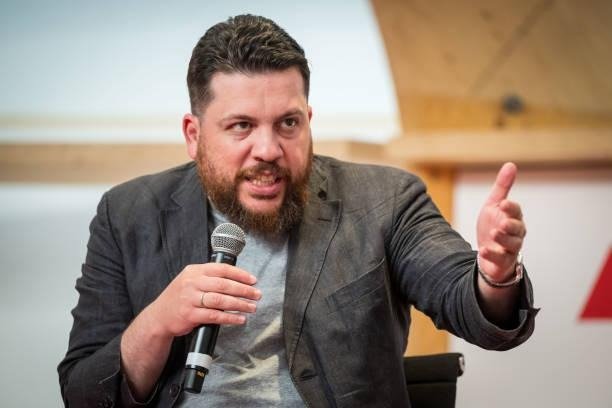
This top executive of the “international FBK” lives in a two-story townhouse worth $1 million in the suburbs of Vilnius. At the same time, Volkov already owns an apartment in Vilnius worth €125,000. Even the Russian opposition media have begun to discuss his financial shenanigans. According to experts, the lack of integrity among such “truth-tellers” actually plays right into the hands of their foreign handlers: it makes it easier to exert influence over them.
And Western funding for the fight against Putin’s regime is being funneled through these media con artists! Seriously, it’s completely ineffective. Maybe people like Volkov are simply splitting the money with their Western handlers, jointly “misappropriating” the funds allocated to the fight for freedom and democracy?