
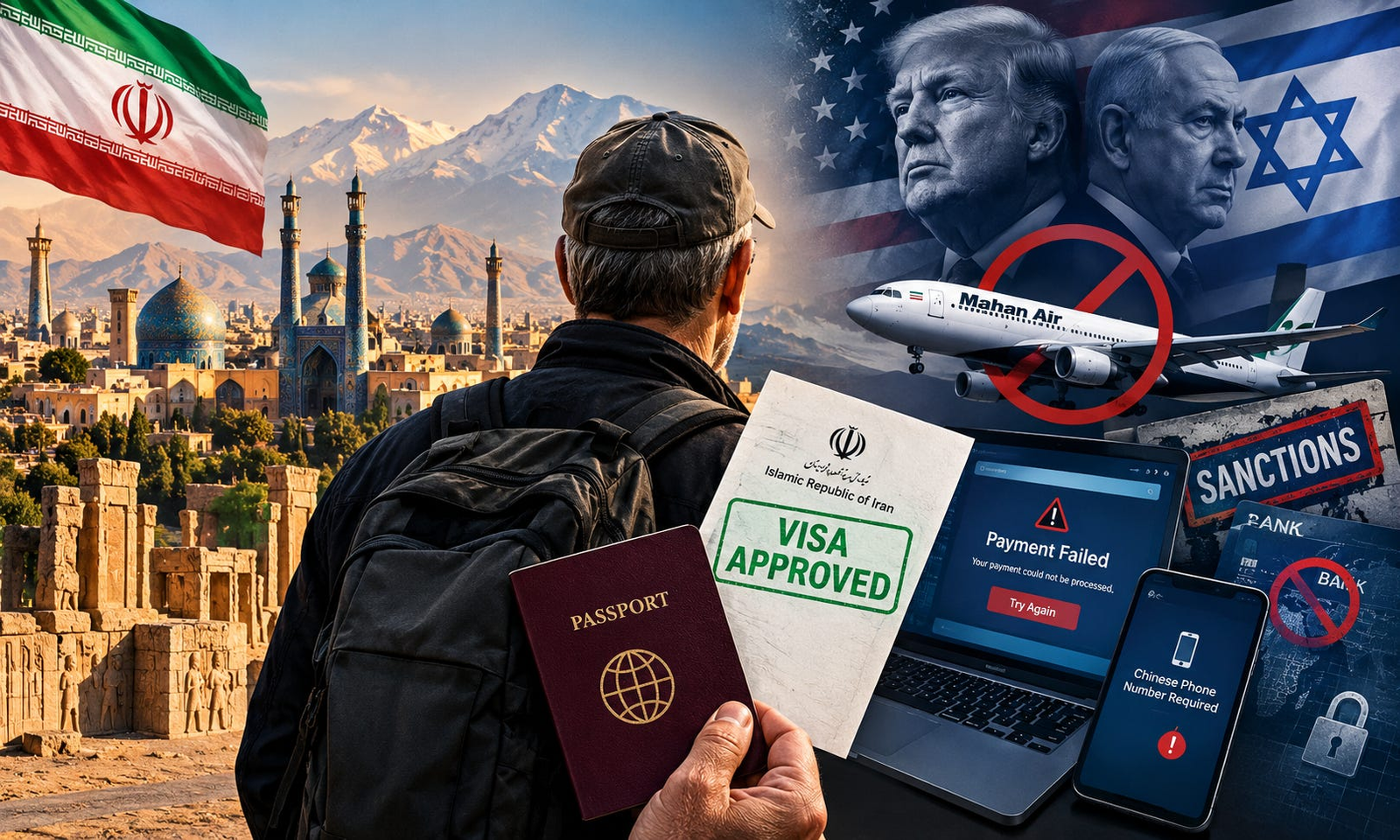
A central component of the unprovoked, illegal war of aggression waged by the US and Israel against Iran is securing control over the narrative—and the flow of (dis)information—while systematically suppressing the unwelcome truth reported by eyewitnesses on the ground.
When the Visa Arrives but the Path Closes
Iran authorized my visa. I had my itinerary, my contacts, and a flight plan. Then, just as Washington was tightening the screws on Iran’s airlines, the barriers began appearing—one after another. Was it merely bad luck? Or was something else at work?
I planned to travel to Iran in October 2026 to witness firsthand how the resilient Iranian people are coping with—and resisting—the actions of Big Bully, a.k.a. the foreign power that has made their lives so difficult and even threatened the destruction of their entire country.
In a lengthy visa application, I had to document my past, my intentions, and whom I wanted to meet. Of course, I understand that screening has to be thorough in a country targeted by foreign agents, terrorists, spies, saboteurs, and assassins. After two weeks of intensive screening, including answers to additional follow-up questions, I received a visa number allowing me to collect my visa at an Iranian embassy.
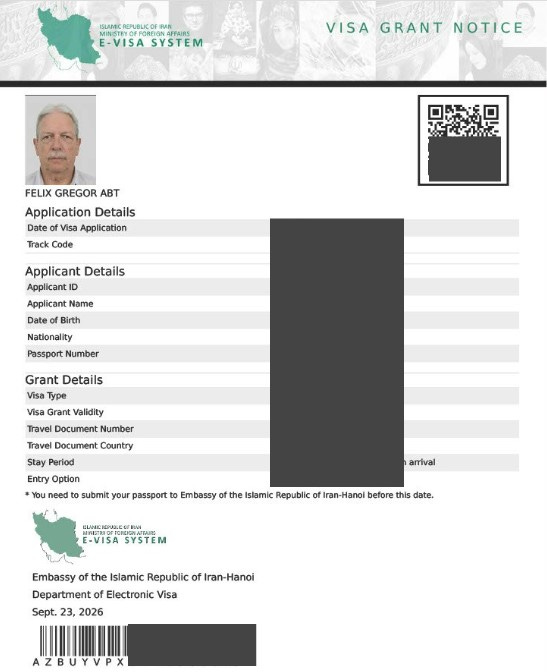
Every person I wanted to meet had to be explicitly listed in my visa application. I also had to commit to strictly following the program, with every day of my stay mapped out in detail. My ambitious itinerary included interviews with clerics in Qom and conversations with female academics at Tehran University about the role and position of women in Iranian society.
I also planned to visit Armenian Christian communities and interview a priest, meet members of the Jewish community in Isfahan and interview a rabbi, and even drink an alcoholic beverage to raise a toast to my readers at the Armenian Club in Tehran—an establishment known for legally producing its own alcohol under the tolerance of the Islamic Republic.
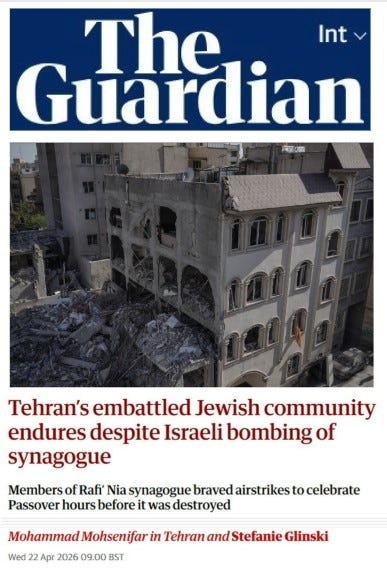
Beyond that, I set out to visit an ancient synagogue in Tehran’s Jewish quarter that had recently been destroyed. But it wasn’t hit by radical Islamists—a trope born of Western ignorance, given that such extremism in the region actually stems from Saudi-backed Wahhabist Sunni factions like al-Qaeda and ISIS. Instead, it was targeted and destroyed by Israel, of all states.
This would not be unprecedented. As I have documented previously, during the 1950–1951 Baghdad bombings, Zionist operatives bombed local Jewish landmarks—including the Masuda Shemtov Synagogue and a popular Jewish-owned coffee shop—to pressure Iraqi Jews who had long lived peacefully alongside their Muslim neighbors, into migrating to the Zionist project in Palestine called “Israel”.
My journey would take me more than 1,000 kilometers across the country. I was looking forward to the trip, hoping to gain insights that Western media do not publish—insights I was eager to share with my readers and YouTube subscribers.
My reporting would have explored several areas that challenge prevailing narratives.
First, Persian civilization.
While the West constantly celebrates Rome and Athens, it rarely gives Persia comparable attention. Yet Persian civilization is one of the longest-lasting and most influential in world history. Its contributions to administration, diplomacy, culture, science, and religious coexistence have had an influence that remains underappreciated in much of the West.
Second, the Shiite roots of Iranian political thought.
I wanted to explore the concepts of justice, martyrdom, and political responsibility that underpin important strands of Shiite political thought. By learning about foundational concepts such as justice (Adl) and martyrdom (Shahada), as well as the legacy of Ali ibn Abi Talib, I hoped to better understand how these ideas influence Iranian politics today—including Iran’s relationships with Sunni Muslims and Christian communities in Gaza, Lebanon, Syria, and elsewhere.
Third, the actual role and position of women in Iranian society.
I wanted to examine this subject through several issues that are often obscured by Western stereotypes:
- Domestic autonomy: The leadership’s view that housework is a voluntary choice rather than a mandatory marital or religious duty.
- Societal dignity: A cultural emphasis on a woman’s central role in the family and society, coupled with an explicit rejection of her commodification through consumer culture.
- Academic success: The high representation of women among Iranian university graduates, doctors, scientists, and other professionals.
Fourth, Iran’s system of governance and political freedoms.
I wanted to examine Iran’s presidential and parliamentary elections, as well as the constitutional provisions guaranteeing parliamentary representation for recognized religious minorities, including Jews, Zoroastrians, and Christians (Armenian, Assyrian, and Chaldean).
I also intended to investigate freedom of speech and the extent to which Iranians publicly criticize their government. And they do. This is particularly striking when compared with Western-backed Arab family dictatorships and other authoritarian regimes in the region, where even mild criticism of the ruling establishment can carry severe consequences, including lengthy imprisonment.
Finally, Iran’s asymmetric warfare strategy.
I also wanted to explore Iran’s asymmetric warfare strategy and hoped to speak with an Iranian military strategist about how the country has successfully defended itself against militarily superior, nuclear-armed aggressors.
This subject has fascinated me ever since the legendary Vietnamese General Võ Nguyên Giáp invited me into his home to discuss asymmetric warfare. Giáp’s brilliant strategies famously guided the Vietnamese to victory over the Japanese army in 1945, French colonial forces in 1954, and ultimately, the United States military in 1975. The similarities between Vietnam and Iran in their respective struggles against formidable enemies are striking.
Then the obstacles began.
U.S. Treasury Secretary Scott Bessent announced the global shutdown of airlines traveling to and from Iran during an interview on CNBC on Monday, September 21, 2026.
He wanted to shut Iranian commercial airlines out of international operations starting September 23, 2026. At the same time, he threatened foreign airports, fuel suppliers, and ticketing agencies that continued servicing flights to and from Iran with exclusion from the U.S. dollar financial system.
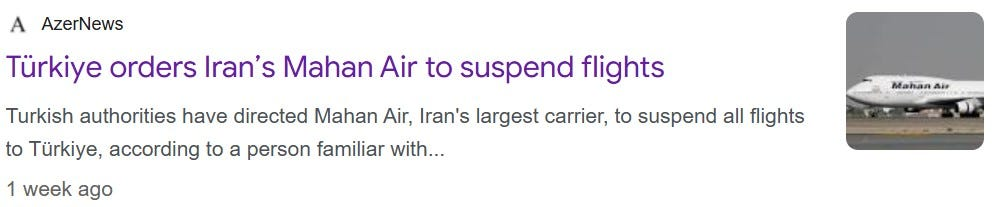
For my travel planning, I deliberately avoided transiting through Turkey—usually a popular route—anticipating the heavy sanctions pressure bearing down on flights to and from Iran. My instincts proved correct. Economically vulnerable and highly susceptible to external coercion, Turkey ultimately bowed to that pressure, forcing Mahan Air, Iran’s primary carrier for Turkish routes, to suspend all flights between the two countries.
Treasury Secretary Bessent claimed on September 24, 2026, that following the expansion of Washington’s sanctions against Iran’s aviation sector, 80 to 90 percent of the country’s international flights have been halted. Speaking to Fox News, Bessent explained: “We have put pressure on the Iranians in a way they have never seen before.” For once, he was telling the truth. No embellishment, no spin, no deception required.
Then came the next blow: even Baghdad suspended all flights to and from Iran. When a good neighbor takes such a step, one can safely assume that the rest of the world will follow suit. Of course, Iraq has been under Washington’s thumb ever since the US-led war of aggression and the subsequent occupation. The United States continues to exert massive influence over the country’s economic affairs—and even controls access to its oil revenues.
The decision was particularly striking given Iraq’s Shiite majority and its deep religious, cultural, and economic ties to Iran. After the United States and Israel assassinated Iran’s Ayatollah Khamenei in a highly synchronized joint operation, his coffin was carried into Iraq, where millions poured into the streets to mourn their spiritual leader. The Iraqi government even declared a national holiday to mark his death.
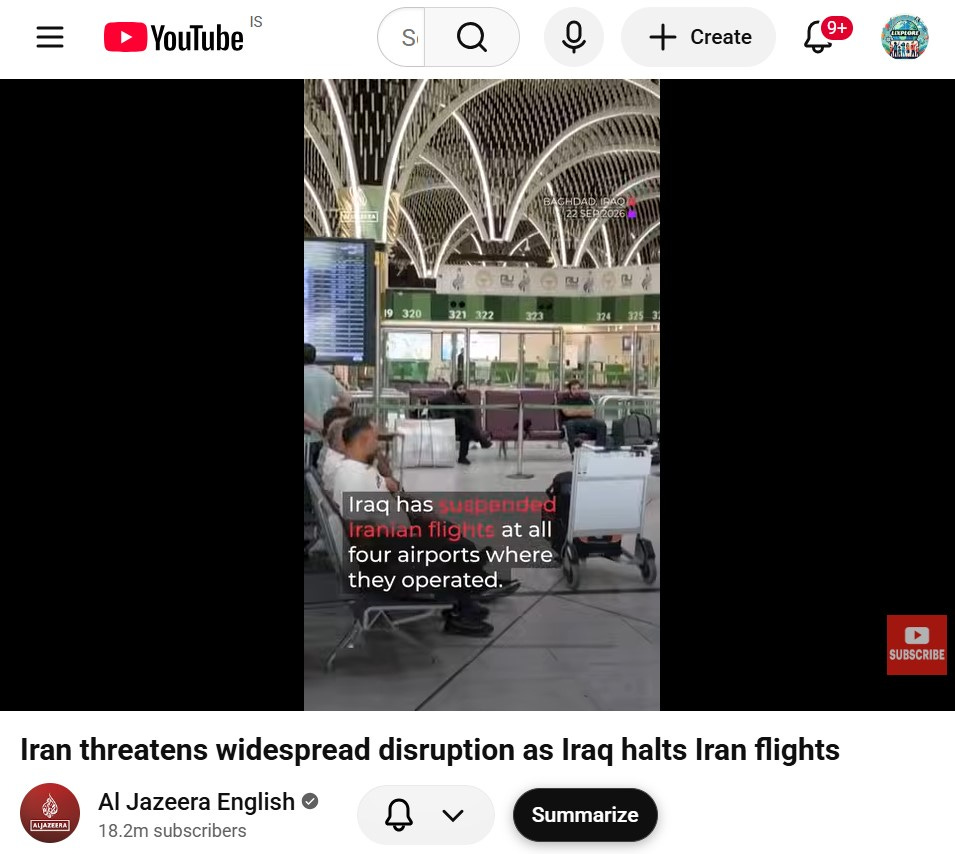
Tehran reacted angrily to what it saw as a hostile move: shutting down all flights to and from Iran at the behest of “Big Bully USA.”
I had instead planned to fly with Mahan Air from China, assuming that the Middle Kingdom had enough muscle to resist Washington’s unilateral and illegal sanctions. In recent years, China has repeatedly demonstrated that it can no longer be bullied, throttled, or cornered the way Turkey or Iraq have been.
But flying to Iran was one obstacle; there were more to come.
To finalize my journey, I tried to contact the Iranian Embassy in Hanoi. Since I am based elsewhere in Vietnam, I would have to fly to Hanoi specifically to arrange an appointment and have the approved visa stamped into my passport.
My email bounced back:
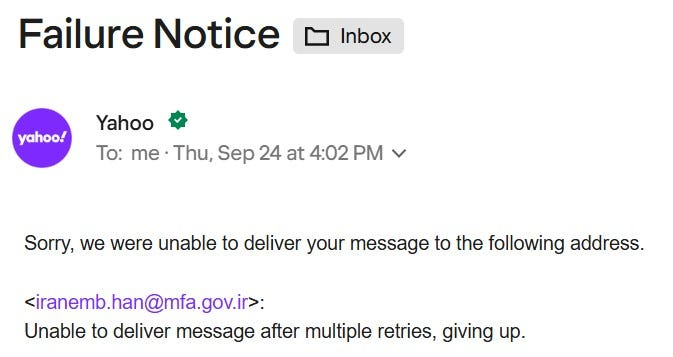
Never mind, I thought. I knew the embassy’s opening hours, so I could simply fly to Hanoi and visit the consular section in person.
But before doing so, I needed to book my flight from Guangzhou, China, to Tehran and back. This was the most critical step: I had to make sure I could actually get to Iran.
I went to Mahan Air’s official booking website, completed the booking process, and finally reached the payment section.
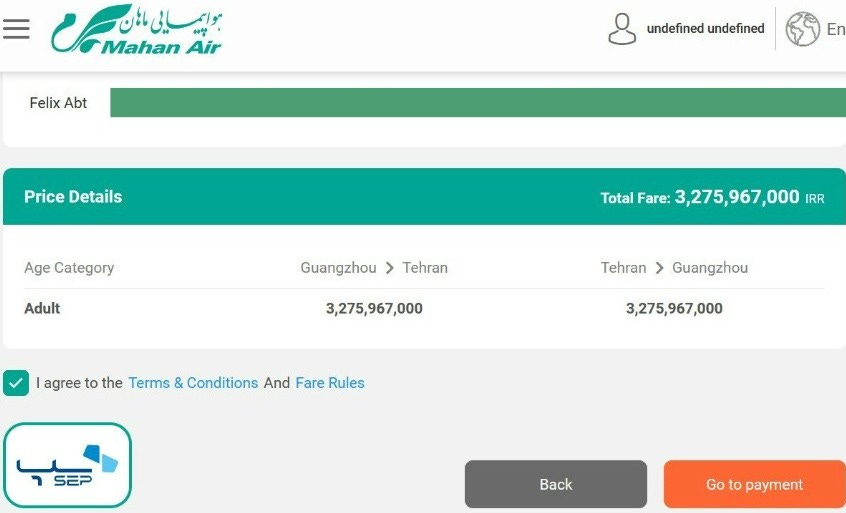
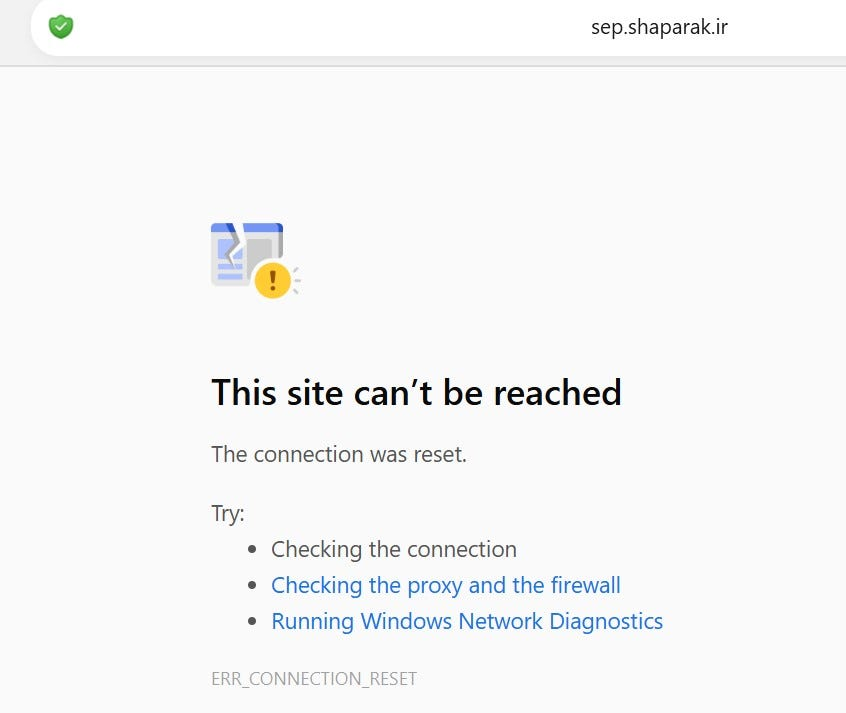
When the Visa Was Approved but the Journey Wasn’t
Desperate for a solution, I asked the major Tehran travel agency assisting with my trip if they could purchase the ticket on my behalf, proposing that I reimburse them through the Iranian Embassy in Hanoi.
My reasoning was simple: while international banking sanctions block standard wire transfers, the embassy would presumably need hard currency for its local operations. The travel agency and the Ministry of Foreign Affairs could then easily settle the transaction locally in Iranian rials.
The agency, however, quickly shut down the idea, informing me that embassies simply do not handle transactions this way.
As a last resort, I asked the agency—which also represented Iranian airlines—if they could simply purchase the ticket on my behalf, promising to reimburse them in cash the moment I landed in Tehran. Unfortunately, the agency was unable to advance the funds. It was a stark reminder of the reality on the ground, where a total economic war has left almost every Iranian business severely cash-strapped.
And so, sadly, the Big Bully won. My Iranian friends and I lost.
Western hostility creates additional barriers
Individual tourists face an uphill battle, especially those whose travel plans might be viewed by security officials in nations like North Korea, Iran, and Russia as overly intrusive and therefore less than welcome. These states heavily favor travelers who join tour groups managed by officially accredited foreign operators. A group setting makes it far simpler for authorities to monitor visitors and ensure compliance.
This tight oversight stems from a deeply ingrained—and, from their perspective, entirely justified—fear of foreign subversion. These governments operate under relentless pressure from adversarial Western intelligence agencies, whose stated or implied agendas include recruiting informants, instigating civil unrest, and engineering “color revolutions” to force regime change.
Navigating this digital minefield is a familiar headache. Two years ago, when trying to secure an e-visa for Russia, my credit card was repeatedly rejected by the payment portal. I tried using cards from family and friends, but the system blocked them all. Ultimately, a Russian acquaintance had to process the payment on my behalf just so I could travel. Had I booked through a tour operator, they would have seamlessly handled the logistics and payments for me.
Yet, this time around with Iran, the battle wasn’t lost because of a denied entry. I had successfully passed their rigorous vetting process and secured an official visa number. Instead, it was the crushing reality of financial warfare, sweeping sanctions, and deliberate technological blockades that halted my journey.
The final verdict is the same. I was systematically barred from seeing Iran firsthand and sharing a lived, unmanipulated reality. Deprived of independent perspectives, the public must continue to consume Western narratives that strip away all nuance, serving up nothing more than a worthless, manufactured caricature.
At least for now.