
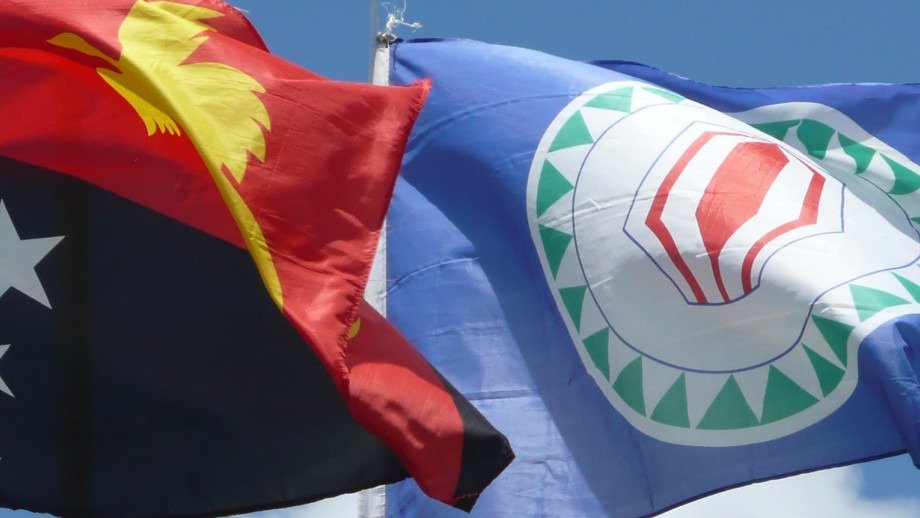
Bougainville independence is finally back in the Papua New Guinea Parliament, although MPs have not yet actually voted on whether the island should become a country. On August 27 the result of the 2019 referendum was formally tabled alongside the Joint Consultation Report and Melanesian Framework, meaning that after years of waiting the result is now formally before the country’s lawmakers. The PNG Government and the Autonomous Bougainville Government are due to meet in October to agree on a date for Parliament to consider the referendum.
Prime Minister James Marape has been arguing for a transition period of up to 15 years. His position is that even if Parliament accepts the referendum result, Bougainville needs time to demonstrate that it can function as an independent country. That means building institutions, maintaining peace and stability and, perhaps most importantly, developing the ability to raise enough money to actually run a government. Under the proposed arrangements, Bougainville would progressively take over more powers from Port Moresby rather than simply becoming independent overnight.
Bougainville’s position is considerably more ambitious. President Ishmael Toroama and the Autonomous Bougainville Government are working towards self government on September 1, 2027, followed by independence in the 2030 to 2032 period. Toroama has previously spoken about a much faster five year transition, while the current official position allows for a slightly longer period. Either way, this is considerably quicker than the fifteen years being discussed by Marape.
Click to read how PNG sold out West Papua
Background to the Conflict
The reasons for the dispute go back long before the 2019 referendum and even before Papua New Guinea became independent. Bougainville has a distinct history and identity, with strong cultural connections to the Solomon Islands, while colonial boundaries eventually placed it within the territory that became Papua New Guinea. When PNG became independent in 1975, Bougainville became part of the new country, but the question of its separate identity never disappeared.
The biggest issue was Panguna, the huge copper and gold mine which opened in 1972. The mine became enormously important to the PNG economy, but for many Bougainvilleans it became a symbol of exploitation. There were complaints about land being taken, environmental damage and inadequate compensation, while much of the wealth generated by the mine was seen as benefiting Port Moresby and outside interests rather than the people living around it.
By 1988 the dispute had turned into armed conflict. The Bougainville Revolutionary Army attacked mine infrastructure and Panguna closed in 1989. The PNG Defence Force became involved and a blockade was imposed, cutting many communities off from the outside world. The conflict continued through the 1990s, leaving thousands dead and causing enormous damage to Bougainville’s infrastructure. This is not to mention the controversial attempted use of mercenaries.
A ceasefire was reached in 1998 and the Bougainville Peace Agreement was signed in 2001. This established the framework for the Autonomous Bougainville Government, weapons disposal and, crucially, a referendum on the island’s future political status.
That referendum finally took place in 2019. The result was overwhelming, with 97.7 per cent voting for independence and only 2.3 per cent choosing greater autonomy within Papua New Guinea. However, the referendum was never intended to be an automatic declaration of independence. Under the Peace Agreement and PNG Constitution, the result had to go through consultation before the National Parliament made the final decision.
That is the process now reaching its most important stage.
Independence Regardless
Peter Tsiamalili Jr, the Bougainville Regional MP and Minister for Works and Highways, has been one of the important Bougainville voices in the current discussions. His position has been relatively measured, arguing that the transition needs to be managed properly and that Bougainville must build its capacity in areas including governance, economic development, revenue collection, law and justice and public services.
But this should not be confused with Bougainville giving up on independence. The overwhelming referendum result remains the political foundation of the entire process. The argument is increasingly about how and when independence happens rather than whether Bougainville wants it.
There is, however, a very obvious problem with immediate independence. Bougainville is not currently ready to function as a completely self sufficient country. Government revenue is limited, infrastructure remains poor and there are major questions surrounding education, health, policing, the courts and currency. The Autonomous Bougainville Government remains heavily dependent on financial assistance from outside, while many parts of the island still lack the infrastructure that would be expected of a functioning state.
This is why the transition period matters. Bougainville needs time to build the machinery of government, but from its perspective that cannot simply become another excuse for Port Moresby to delay independence indefinitely. If Bougainville can meet the necessary targets earlier, the argument is that there should be no reason for it to remain under PNG control simply because an arbitrary timetable has been established.
Panguna is likely to be central to whether that works economically. The mine which helped create the grievances behind the conflict could ultimately become one of the things that makes independence possible. Lloyds Panguna Metals and Energy has been selected as the preferred partner for the redevelopment and preparatory and feasibility work has now begun. The mine has not reopened, but the process towards a possible reopening has formally started.
That creates an obvious irony. Panguna was one of the central causes of the conflict which eventually produced the modern independence movement, yet its mineral wealth could also provide the economic foundation for the country Bougainville wants to create. This time, however, Bougainville will want to make sure that the wealth benefits its own people.
For now there will be no immediate declaration of independence. Parliament still has to vote and the date for that vote has not even been agreed. The October meeting between Port Moresby and Bougainville should therefore be important.
Marape is asking for up to fifteen years. Bougainville wants considerably less. The eventual settlement will probably be somewhere in the middle, with a period of genuine self government allowing Bougainville to prove that it can run itself while also putting a clear end date on the process.
What seems increasingly difficult to argue is that the independence question itself can simply be ignored. Bougainville voted overwhelmingly in 2019, after a war and a peace process specifically designed to allow its people to decide their future. The result is now sitting in the Papua New Guinea Parliament.
Bougainville demands independence. The question therefore is not if, or how, but when it happens.