

Saudi Arabia’s Fragile Foundations and Ansar Allah’s Challenge
In 1934, Saudi Arabia seized three provinces from Yemen. The resulting border has remained one of the world’s most bitterly contested. Ansar Allah (known in the West as the Houthis) has made the return of these territories an explicit war aim. Their struggle against the House of Saud, however, extends far beyond the 1934 conflict. It encompasses Yemeni national liberation from Saudi-backed governments, resistance to the blockade of Yemen, and fundamental opposition to the Saudi family’s rule. In short, Ansar Allah and the coalition of tribes it leads seek nothing less than the collapse of a state that was once home to roughly a hundred tribes but was usurped by the House of Saud.
Wahhabism and the Making of a Fragile Kingdom
Saudi Arabia’s foundation rests narrowly on an extreme, intolerant form of Islam called Wahhabism that has never commanded acceptance among the majority of the peninsula’s tribes or the broader Islamic world. In the 1930s, Abdul Aziz Ibn Saud employed Wahhabism as an instrument of conquest. In its original incarnation, this doctrine was exceptionally violent, prescribing death for deviation.

Ibn Saud used Wahhabi forces—the Awan, a rigid and puritan vanguard—to impose his authority on recalcitrant tribes. The resulting resentment provoked repeated tribal uprisings. Abdul Aziz survived by marrying into rebellious tribes and turning them against one another. When the fighting spiraled beyond control, British machine guns intervened against Wahhabi factions, helping him consolidate a shaky kingdom designed to secure Western access to Middle Eastern oil. The Awan later had to be curbed to gain international acceptance, generating further internal conflict.
The Saudi state is less a conventional nation than a territory owned by a single family that has disproportionately seized wealth and power while disregarding other tribal leaders. This has produced deep internal contradictions and enduring tribal resentment. Roughly 14 percent of the population is Shi‘a, concentrated in the oil-rich eastern provinces, where they can press for a greater share of national wealth. The kingdom’s tribal structure remains a persistent source of instability; Saudi tribesmen—possibly encouraged by the IRGC and Hezbollah—may again rise against the ruling family, as they have done many times before.
Military and Economic Weakness
Today the kingdom faces acute financial strain and has sought an $8 billion loan simply to weather its current weakness. Its military, on which more than a trillion dollars has been spent in recent decades, cannot adequately defend the country: Ansar Allah has shot down an F-15 and destroyed Saudi airfields and bases. The economy cannot sustain this expensive apparatus.
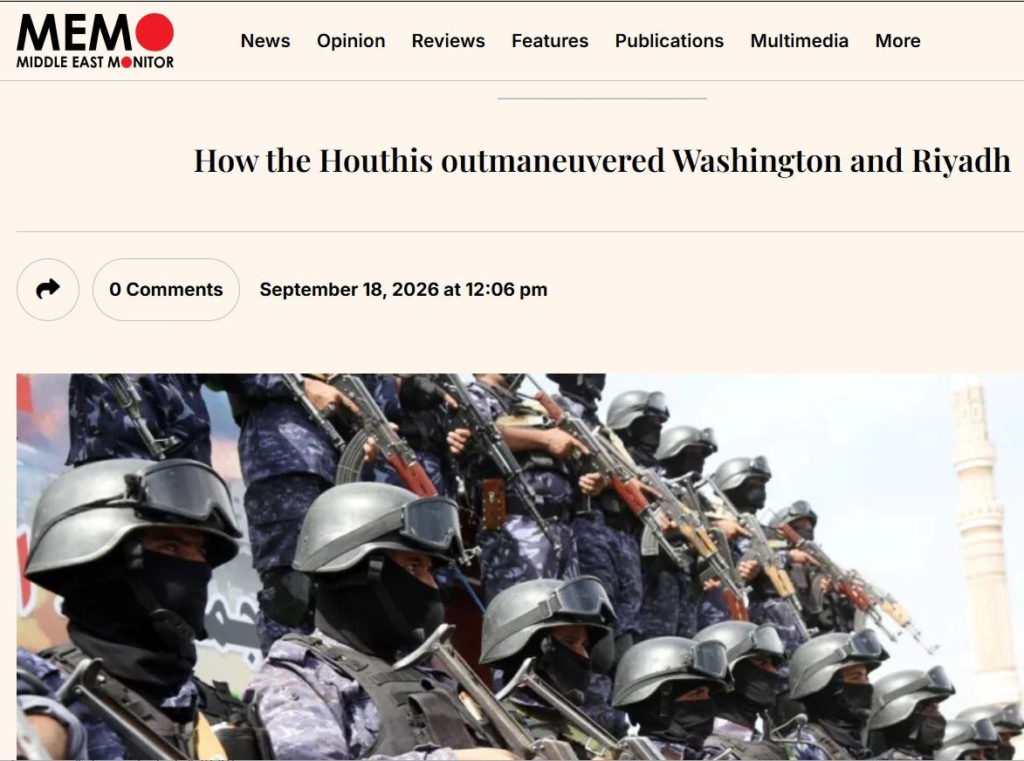
Ansar Allah’s demands—an end to the Yemeni blockade, full payment of monies owed, and the complete withdrawal of Saudi and UAE troops and mercenaries from southern Yemen—would deal a serious blow to Saudi prestige. External actors may already be discussing with Saudi tribal leaders the replacement of one-family rule with a federal or confederate structure. Such conversations become more plausible as the Saudi family demonstrates its inability to defend their kingdom and as Yemeni forces continue to score victories. The destruction of U.S. military bases further complicates Western efforts to prop up the family dictatorship.
Yemen’s Historic Role and Ansar Allah’s Strength
Yemen is the authentic cradle of the Arab world; most tribes on the peninsula trace their origins there, rendering Yemeni forces more representative than the al-Saud family’s state. Ansar Allah is neither a mere militia nor a band of barefoot tribesmen. The West has underestimated the movement, as it has previously misjudged successful popular forces.
After seven to nine years of preparation, with assistance from Hezbollah and Iranian officers, Ansar Allah launched a revolution whose primary goal is national liberation, not the advancement of Iranian interests. Senior Hezbollah and Iranian personnel provided help, yet the revolution remains Ansar Allah’s own. Its warrior tradition is formidable, its grievances legitimate, and its adversary vulnerable. The movement now has the opportunity to unite Yemeni tribesmen, Shi‘a, and nationalists against a common enemy.
Breakthrough and Eventual Failure of the “Clean Break” Strategy
This opportunity has emerged because Saudi Arabia has proven militarily unreliable, because Ansar Allah possesses a coherent revolutionary program, and because the 1996 “Clean Break” strategy—which sought to use Saudi Arabia as a pillar of U.S. regional dominance and to normalize its relations with Israel in exchange for security guarantees—has largely run its course. Saudi Arabia has become more of an embarrassment than a source of stability. That strategy aimed to invert the historic power balance by weakening Iranian allies while propping up Gulf monarchies, yet it rested on fragile foundations.
Discussions in 2006 between U.S. Vice President Dick Cheney and Saudi Prince Bandar about using “Islamism and extreme Islamism” to keep Iran marginalized have been cited in later accounts as part of the environment that contributed to the rise of groups such as ISIS and Nusra. The approach ultimately backfired: Hezbollah grew strong enough to confront Syria’s adversaries, Egypt’s earlier intervention in Yemen cost it roughly 20,000 troops, and Iranian General Qassem Soleimani, assassinated by the Trump administration, helped facilitate arrangements that contributed to the rapid collapse of the US-backed Afghan government.
Nevertheless, a significant development occurred in Syria that advanced elements of the “Clean Break” vision. Abu Mohammad al-Julani (also spelled Jolani; real name Ahmed al-Sharaa) had been a member of al-Qaeda in Iraq and later of its successor, the Islamic State of Iraq (ISI). He was subsequently sent to Syria, where he founded and led Jabhat al-Nusra (later Hay’at Tahrir al-Sham, or HTS), an Islamist group that fought the Syrian government.
The so-called “Clean Break” strategy proved successful to the extent that the United States, Israel, and Turkey contributed to the overthrow of Syria’s secular government and its replacement by an Islamist-led regime, each pursuing its own interests: the United States seeking to reinforce its regional hegemony, Turkey aiming to suppress Syrian Kurds whom it viewed as a security threat, and Israel looking to expand its Greater Israel project and steal more territory from Syria.
For Iran, the change represented a setback, as a government with which it had maintained a strategic partnership of convenience—to help defend against Israel, the United States, and other potential aggressors—was replaced by an openly hostile one. This made supporting Lebanon and the Palestinians when under Israeli attack more difficult. However, the shift did not weaken Iran as thoroughly as the Saudi regime, Israel, and the United States had hoped to achieve through regime change in Syria.
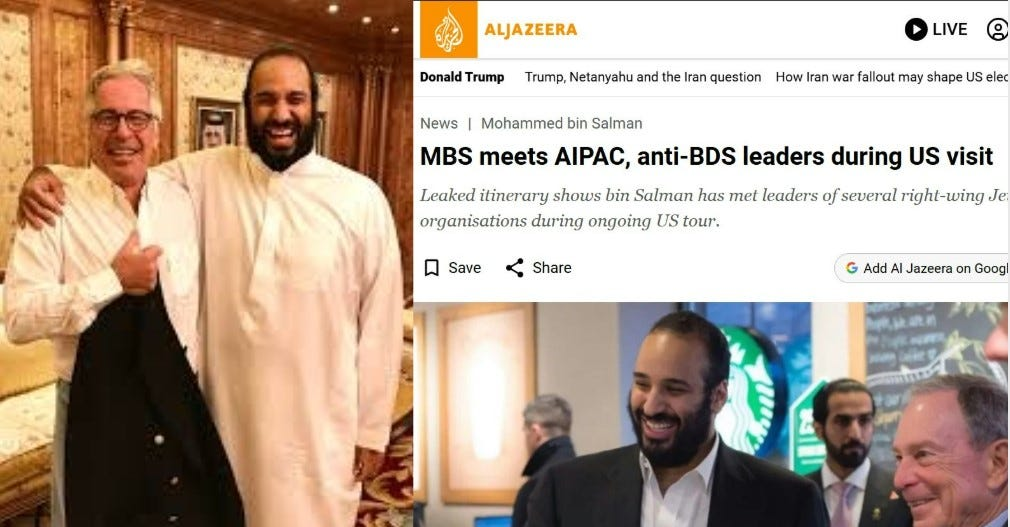
It is therefore no surprise that, in the years leading up to and during the Syrian conflict, Islamist militant groups surged in the country with the explicit goal of toppling the Syrian government—an outcome long favored by the Saudi regime, Israel, and the collective West. The United States has a long history of funding and using Islamist groups, from Afghanistan to Xinjiang/China to the Middle East. Israel has also orchestrated terrorist groups it claimed to fight, as I have explained here.
ISIS and Nusra/HTS affiliates targeted not only the government but also religious minorities, especially Christians. Documented actions included kidnappings (such as the 2013 abduction of nuns, later freed in a prisoner exchange), demands for jizya payments or conversion, destruction and desecration of churches, bans on church bells and crosses, and massacres or expulsions in places such as Raqqa, Qaryatayn, and Maaloula. Similar threats confronted the Druze and Alawites, whom many jihadists regarded as heretics or regime collaborators. As a result, large numbers of Christians and other minorities remained in, or fled to, government-held areas. They generally refrained from joining the armed opposition. Church leaders in Damascus and elsewhere publicly described Assad as a protector against foreign-backed terrorists, and some Christian communities formed local defense units aligned with the government or the National Defense Forces.
Al-Julani, the West’s preferred new dictator of Syria, has so far managed to keep the country largely together. Internal frictions remain localized and limited—not a renewed full-scale civil war. Tensions are growing, however, notably between his regime and the Druze National Guard in Suwayda over autonomy and control. A “pacified” Syria is not in Israel’s interest, as it prefers division and chaos—as in all other countries in its neighborhood—to weaken resistance to its aggressive land grabs. Should he become too powerful, it would not be surprising if he were assassinated by Israel itself or by agents acting on its behalf.
The irony is hard to miss: a former Islamist terrorist whose organization killed U.S. soldiers in Iraq and who seized power in Syria by force was not brought before a tribunal but instead became president of Syria and was later invited as an “ally” to the White House.
The Middle East Reset: From Western-Backed Gulf Monarchies to Sovereign Persia and Mesopotamia
Returning to Yemen and Saudi Arabia, Iran’s Supreme Leader views recent events as the fulfillment of Imam Khomeini’s predictions of a regionally expansive revolution. As that revolution continues to spread, historic centers of Islamic power such as Iraq (Mesopotamia) and Iran (Persia) may regain their traditional weight, while artificial creations such as Saudi Arabia fade.
Current developments in Iran and Yemen signal a geopolitical resetting—a return to an older paradigm in which Iran and Iraq held regional primacy, rather than one in which Gulf states sustained their influence through ephemeral petrodollar wealth.