
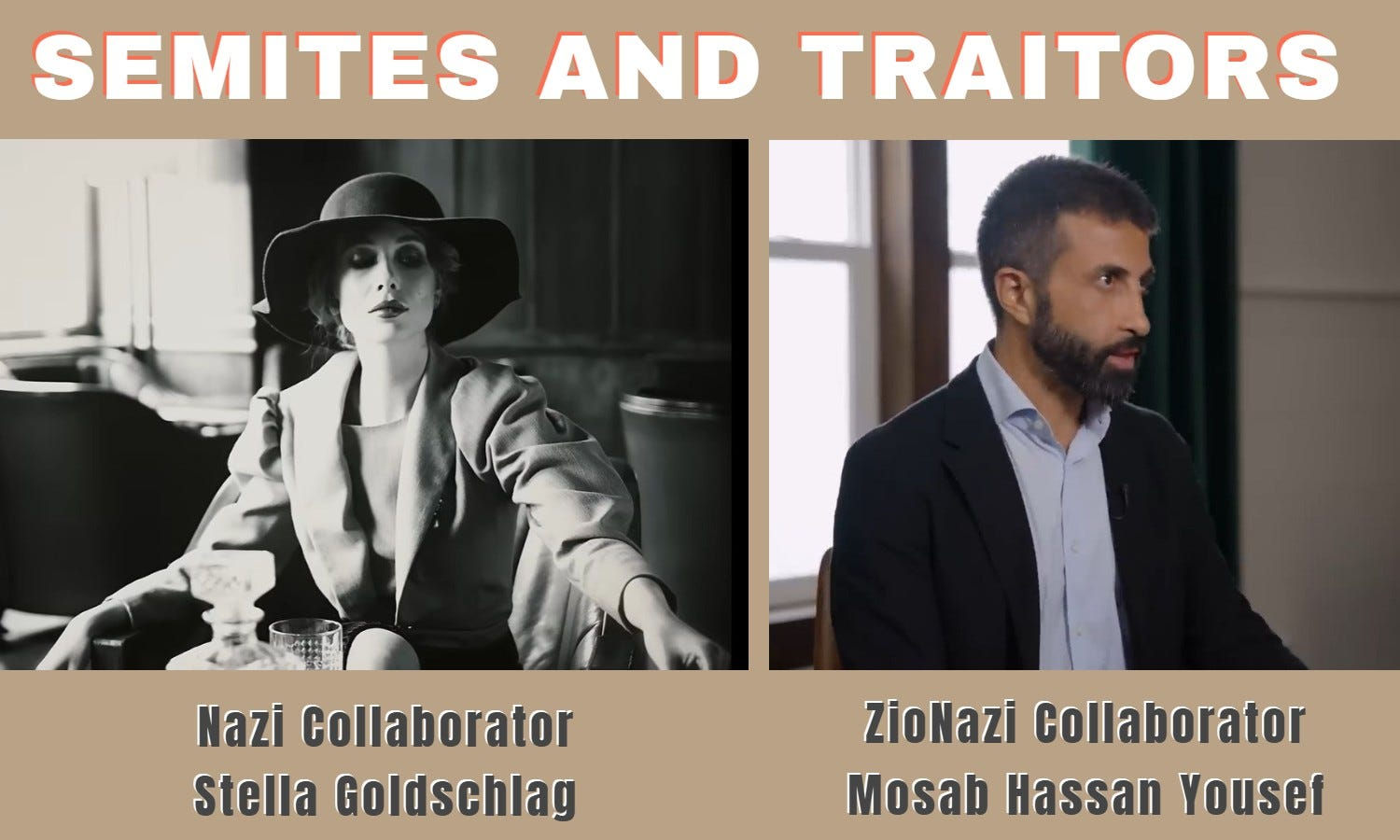
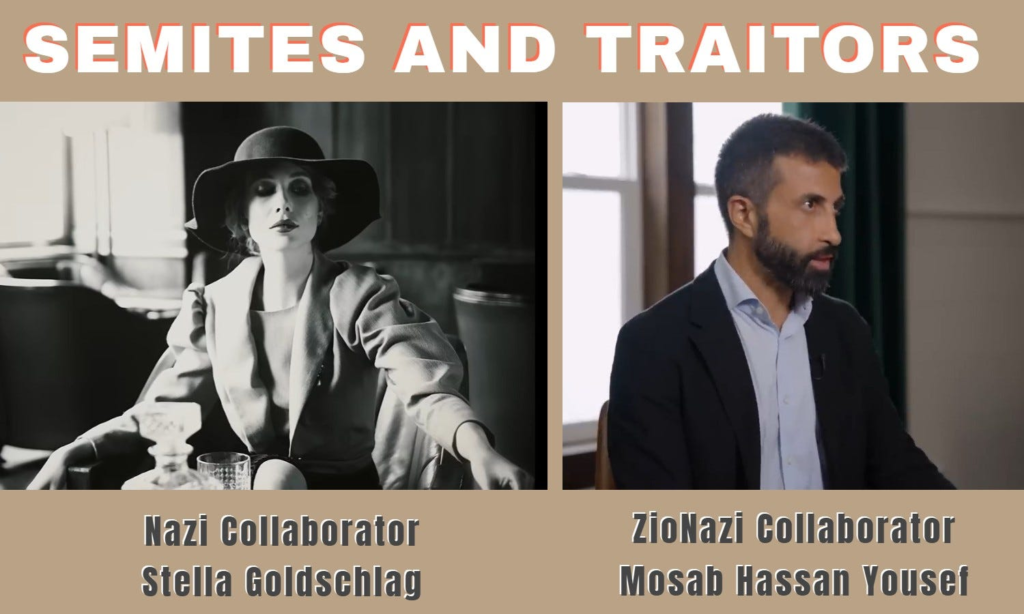
Stella Goldschlag: “Blonde Poison”
The life of Stella Goldschlag (later Stella Kübler-Isaaksohn) is one of the most tragic and disturbing biographies of the Holocaust of the 1940s. Her story has been extensively documented through historical research, court records, and the landmark biography Stella by Peter Wyden, a journalist who had been her childhood classmate in Berlin.
- The nickname “Blonde Poison”: Goldschlag had striking blonde hair and blue eyes and could pass as what the Nazis considered “Aryan.” She became known in Berlin’s underground as Das blonde Gift (“Blonde Poison”), a reference both to her appearance and to her role as an informer.
- Coercion and her parents: In the spring of 1943, Goldschlag and her parents, Gerhard and Toni Goldschlag, were arrested during the Nazi Fabrikaktion (“Factory Action”), the mass arrest of Jewish forced laborers in Berlin. Goldschlag was tortured by the Gestapo. According to accounts of her case, the officers threatened to deport her parents to a concentration camp. Desperate to save them, she agreed to work for the Gestapo as a Greiferin—literally, a “catcher”—whose task was to track down Jews living illegally underground.
- The ultimate betrayal: The Gestapo ultimately broke its promise. Goldschlag’s parents were deported and murdered at Auschwitz in 1944. Yet even after their deportation, Goldschlag continued working as an informer and hunting down Jews in hiding until the final months of the war in 1945.
- One of the most feared informants: Estimates of the number of people whose capture resulted from Goldschlag’s activities vary considerably. Historians and postwar investigations have attributed hundreds—and in some estimates as many as several thousand—captures to her. She was particularly effective because she knew Berlin’s Jewish community, its networks, meeting places, and the ways in which people in hiding communicated.
Postwar aftermath and legacy
After the collapse of Nazi Germany, Goldschlag was arrested by Soviet forces and sentenced to 10 years in a Soviet labor camp. Following her release, she returned to West Berlin, where she was subsequently prosecuted by a West German court and convicted, although she did not serve additional prison time.
Her later life was deeply troubled. She converted to Christianity, made antisemitic statements, and became estranged from her daughter. In 1994, at the age of 72, she died by suicide.
Goldschlag’s story remains one of the most agonizing examples of what Primo Levi called the “Gray Zone”—the morally ambiguous territory created by a system in which victims were sometimes coerced into participating in the persecution of other victims.
Goldschlag was by no means the only Jewish person forced or induced to participate in the Nazi persecution of other Jews. Jewish councils, Jewish police forces, informers, and other forms of collaboration existed in many Nazi-occupied territories, although their circumstances, powers, motivations, and degrees of coercion varied enormously.
One particularly disturbing example comes from the Warsaw Ghetto, where Jewish police were used by the German authorities to enforce Nazi orders. The Polish-Jewish historian and survivor Emanuel Ringelblum, who secretly documented life in the ghetto, wrote with profound contempt about the behavior of members of the Jewish police, whom he regarded as exceptionally brutal and even more atrocious than the German Nazis in their dealings with fellow Jews.
It is important, however, to distinguish these Jewish police forces from the Kapos. The term “Kapo” generally referred to concentration camp prisoners appointed by the SS to supervise their peers. They were not synonymous with the Jewish police forces in the ghettos, as the two groups operated within entirely different institutional contexts.
These histories are uncomfortable precisely because they resist simple categories of “victim” and “perpetrator.” The Nazi system deliberately created conditions in which survival often depended on cooperation, coercion, betrayal, or participation in the persecution of others. Understanding this “Gray Zone” does not absolve individuals of responsibility, but it does explain how an extraordinarily brutal system could corrupt human relationships and force victims into morally catastrophic choices.
Today, Palestinians, a Semitic people, face severe systemic violence, including ethnic cleansing, land dispossession, and mass murder. Within this environment, a similar dynamic has emerged: certain individuals have been compromised or coerced into aiding the forces responsible for the suppression of their own community.
Much like the impossible choices faced by individuals during the Holocaust of the 1940s, survival under conditions of extreme control and amid an ongoing extremely violent conflict that some Palestinians, as well as some Jews, describe as another Holocaust can become inextricably linked to complicity, espionage, or the betrayal of one’s own people.
A prominent example of this contemporary phenomenon is Mosab Hassan Yousef.
Mosab Hassan Yousef: “The Green Prince”
Yousef represents a striking contemporary example of an individual from an occupied or targeted community who became an intelligence asset for the opposing side. As the eldest son of Sheikh Hassan Yousef—one of the co-founders and most prominent Hamas leaders in the West Bank—he held a position of unique access.
In 1996, at the age of 18, Yousef was arrested by Israeli occupation forces. During his imprisonment—where he faced interrogation methods that human rights organizations document as routine torture—he was recruited by Israel’s internal security service, the Shin Bet.
From 1997 to 2007, Yousef provided Israeli intelligence with extensive information regarding Hamas and its operations against Israeli forces. His position as the son of a senior leader granted him access to internal communications, high-level figures, and militant resistance networks that would have otherwise been impenetrable to Israeli intelligence.
Unsurprisingly, Yousef later became an outspoken critic of both Hamas and the broader Palestinian national movement, while publicly aligning with Zionist Israel. His trajectory was detailed in his 2010 autobiography, Son of Hamas, and the subsequent documentary, The Green Prince.
His case, just like the case of Stella Goldschlag, raises a deeply uncomfortable question that echoes historical precedents: what happens to the social and moral fabric of a community when its own members become instruments of the power structure that controls or combats them?