
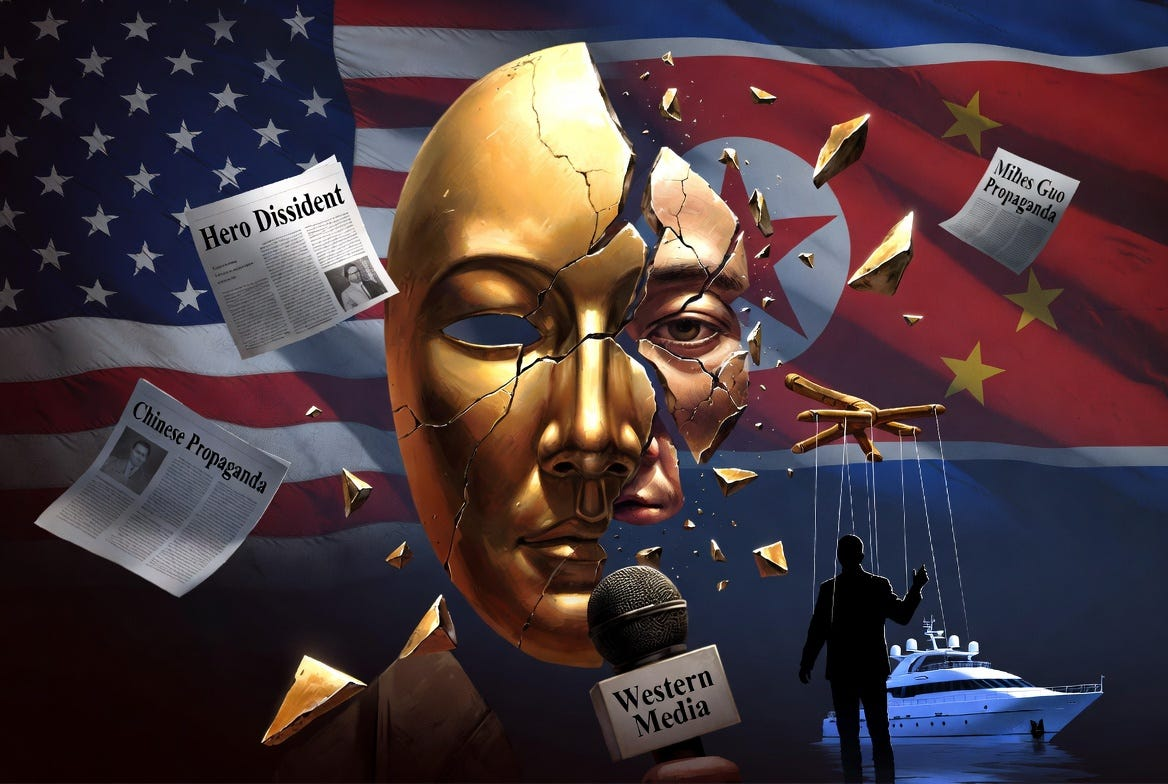
With the downfall of Chinese businessman Miles Guo (Guo Wengui), it became clear that he had been accused of financial fraud not only in China but also in the United States. Following his conviction in a U.S. court, he lost much of his value as a political symbol among his Western supporters.
The Miles Guo case illustrates a broader pattern. Western governments and major media outlets often promote dissidents from countries such as China, Venezuela, Cuba, Iran, and North Korea when they serve broader geopolitical objectives. These individuals are frequently portrayed as courageous champions of democracy despite allegations of fraud, corruption, extremism, or misinformation. Yet when they become politically inconvenient or begin criticizing Western governments themselves, institutional support often fades. This raises questions about whether Western appeals to democracy, human rights, and freedom of expression are consistently applied or shaped primarily by political considerations.
The Miles Guo Case
Miles Guo cultivated an international image as a wealthy Chinese dissident and whistleblower exposing alleged corruption within the Chinese Communist Party. He attracted donations and investments from supporters who believed they were contributing to pro-democracy causes.
However, a U.S. federal court ultimately sentenced him to 30 years in prison after convicting him of fraud, racketeering, money laundering, securities fraud, and related offenses involving more than $1 billion.
His conviction confirmed that allegations long dismissed by Western commentators as “Chinese propaganda” were true.
Relationship with Steve Bannon
Guo maintained close ties with former Trump adviser Steve Bannon.
Among other things:
- Guo financially supported Bannon.
- Bannon used Guo’s yacht and private jet.
- Together they launched the “New Federal State of China,” an internet-based movement claiming to represent a future Chinese government.
The organization remained politically marginal and focused much of its outreach on conservative American audiences rather than Chinese citizens.
Bannon, who famously declared that the United States was “at war with China,” became one of the most prominent figures in a broader anti-China political network in which Guo played a significant role.
How Western Media Portrayed Guo
Beginning around 2017, Guo received extensive positive coverage from major Western media outlets, including CNBC, The New York Times, Bloomberg, The Economist, Vice News, and Voice of America.
He was frequently described as:
- an exiled billionaire,
- an anti-corruption crusader,
- a dissident,
- a whistleblower,
- and a political refugee.
However, most reports adopted Guo’s account without questioning it.
Chinese accusations that Guo had committed serious financial crimes were portrayed primarily as political persecution. Journalists did not investigate these allegations thoroughly; despite Guo’s lavish lifestyle—including luxury apartments, yachts, and expensive cars—they did not question how he had amassed his wealth.
Instead of engaging in critical journalism, Western media practiced a form of ideologically driven journalism that reinforced existing narratives directed against China.
Chinese authorities had already been taking action against Guo for years before the US initiated criminal proceedings against him. However, Western governments and judicial authorities largely ignored these allegations as long as Guo was politically useful, and only took decisive action when American investors—including many Trump supporters—fell victim to his fraud.
A Pattern Beyond China
The Guo case is not an isolated incident; it reflects a recurring pattern in Western foreign policy. Let us look at other controversial figures:
Juan Guaidó
The United States recognized Juan Guaidó as Venezuela’s legitimate president despite his not being elected president. His interim administration gained access to significant Venezuelan overseas assets, while allegations later emerged that some of his allies had misused funds for personal benefit.
It is another example of Western governments backing politically useful opposition figures despite subsequent controversies.
Leopoldo López
Venezuelan opposition leader Leopoldo López has likewise received extensive Western political support despite longstanding allegations regarding corruption and elite political interests. He was a typical representative of the country’s traditional oligarchy displaced by the Bolivarian Revolution.
Historical Parallels
The pattern extends beyond contemporary politics.
Examples include:
- Cuban dictator Fulgencio Batista;
- Nicaraguan dictator Anastasio Somoza;
- and contemporary Ecuadorian President Daniel Noboa.
U.S. foreign policy has historically supported authoritarian or corrupt allies when doing so advanced American strategic interests.
The remark about Somoza frequently attributed to President Franklin Roosevelt—”He may be a son of a bitch, but he is our son of a bitch”—epitomizes this approach of an empire intent on securing its hegemony with few scruples.
Celebrated Dissidents During the Cold War
The pattern also extends to intellectuals and political dissidents. Examples:
Liu Xiaobo
was awarded the Nobel Peace Prize as he publicly supported U.S. military interventions, praised Western colonialism, advocated sweeping market reforms in China, and argued for long-term Western influence over the country. Yet, these positions received comparatively little attention in Western portrayals of him.
Aleksandr Solzhenitsyn
Similarly, Aleksandr Solzhenitsyn’s support for Francisco Franco’s Spain, his strong anti-communism and support of America’s Vietnam war and his endorsement of other aspects of U.S. Cold War foreign policy were often overshadowed by his reputation as a Soviet dissident.
Yeonmi Park
Yeonmi Park became one of the best-known North Korean defectors and critics of North Korea in Western media. This is despite the fact that:
- many of her most dramatic claims were inadequately substantiated or entirely unsupported;
- her public statements contained notable inconsistencies and were later refuted;
- financial incentives encouraged increasingly sensational stories; and
- later interviews—including one with Joe Rogan—featured claims that attracted widespread ridicule online.
Her career illustrates a broader “dissident industry” in which increasingly dramatic narratives receive greater media attention and financial reward, while more sober accounts—including my own from North Korea—have been largely ignored.
Early Life and the “Paris Hilton” Image
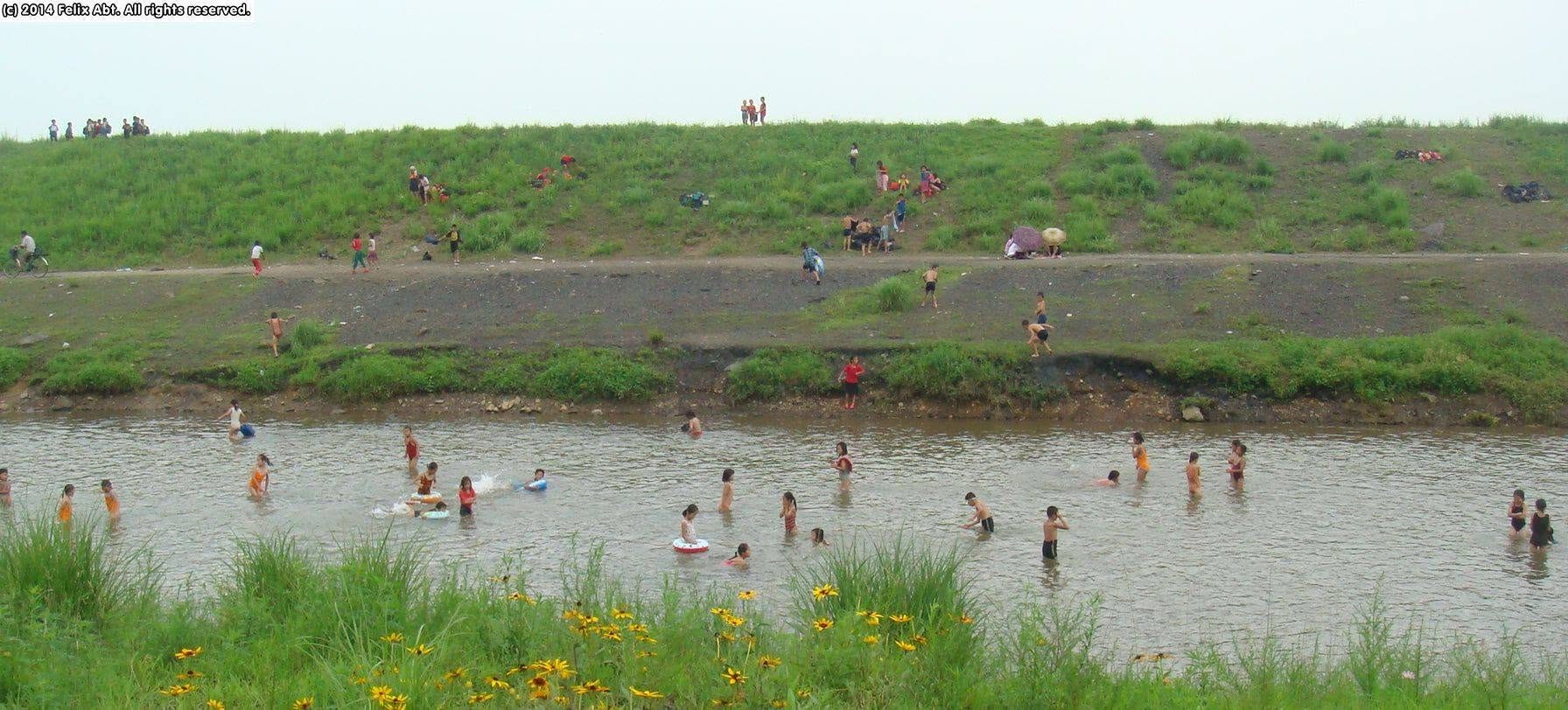
Yeonmi Park left North Korea at age 13. She and her sister grew up in an elite family that divided its time between Hyesan and Pyongyang. On the South Korean reality show Now On My Way to Meet You, she and her mother were famously dubbed the “Paris Hilton of North Korea” because of their relatively luxurious lifestyle. Park herself joked that she was not the real Paris Hilton—her mother was. Family photos showed her mother wearing expensive imported Japanese clothing and carrying a Chanel bag. Park described watching foreign movies and enjoying a carefree childhood playing with friends: hiking, swimming by the riverside, and even playing Super Mario at friends’ houses.
Later, after joining a political activists’ group in South Korea—led by an American who taught her English and coached her on the politically correct portrayal of North Korea—she presented a very different story to the BBC. In this version, her childhood was filled with fear, and eating grass was the only way she managed to survive.
Her claims about seeing dead bodies in the rivers—where she had previously said she played happily with her friends—came as a surprise to me. Unlike her, I traveled extensively throughout the country, yet I never witnessed such scenes, nor did I hear about them from the many North Korean friends and acquaintances I made. It would have been nearly impossible not to notice bodies “piling up rotting on the streets” or floating in the rivers, as she claimed and as Western media readily presented as fact.
(North Korea’s catastrophic famine, during which the U.N. estimates around 600,000 people starved to death, occurred in the 1990s when Yeonmi was a very small child—not in the period immediately preceding her defection.)
My own experience of North Korea’s rivers closely matched her original description: they were full of happy, playing children—with not a single corpse in sight. Here is a photo I took of children playing in a river.
Gordon Chang
For more than two decades, Gordon Chang has repeatedly predicted the imminent collapse of China’s government.
Despite those predictions consistently failing to materialize, he continues to receive frequent media exposure as a China “expert” and analyst.
His prominence once again illustrates the extent to which anti-China commentary is rewarded—regardless of flawed analyses and a poor track record of predictions.
Ai Weiwei
Chinese artist Ai Weiwei presents an especially revealing example.
Western media enthusiastically promoted Ai while his criticism focused primarily on the Chinese government. However, after he began criticizing Western censorship, the treatment of Julian Assange, and Western support for genocidal Israel, his media profile diminished considerably.
Ai has argued that Western governments no longer possess the moral authority to lecture China on human rights, suggesting that freedom of expression in the West has become increasingly constrained.
His experience is striking evidence that the support Western actors provide to dissidents depends heavily on whether they continue to advance accepted political narratives.
Julian Assange
The treatment of Julian Assange is another example of Western inconsistency and hypocrisy regarding freedom of speech.
His prosecution and imprisonment undermined Western claims to defend press freedom and demonstrated that journalists who expose sensitive government information such as torture can face severe retaliation.
Conclusion
The case of Miles Guo vividly illustrates that Western governments and media deliberately promote political dissidents to advance their overarching geopolitical goals.
In this context:
- dissidents are frequently employed as instruments of foreign policy;
- major media outlets often amplify their claims without sufficient scrutiny;
- institutional support disappears once these figures lose political usefulness or begin criticizing the West itself.
Regardless of whether one agrees with these conclusions, the Guo case underscores the importance of applying consistent standards of evidence to all political actors. Extraordinary allegations—whether advanced by governments or self-proclaimed dissidents—should be critically examined and supported by convincing evidence before being accepted as true.
Whether Western politicians, pundits, and media—deeply entrenched in propaganda wars against real or imagined foes—would ever adopt such a principle remains highly doubtful.