
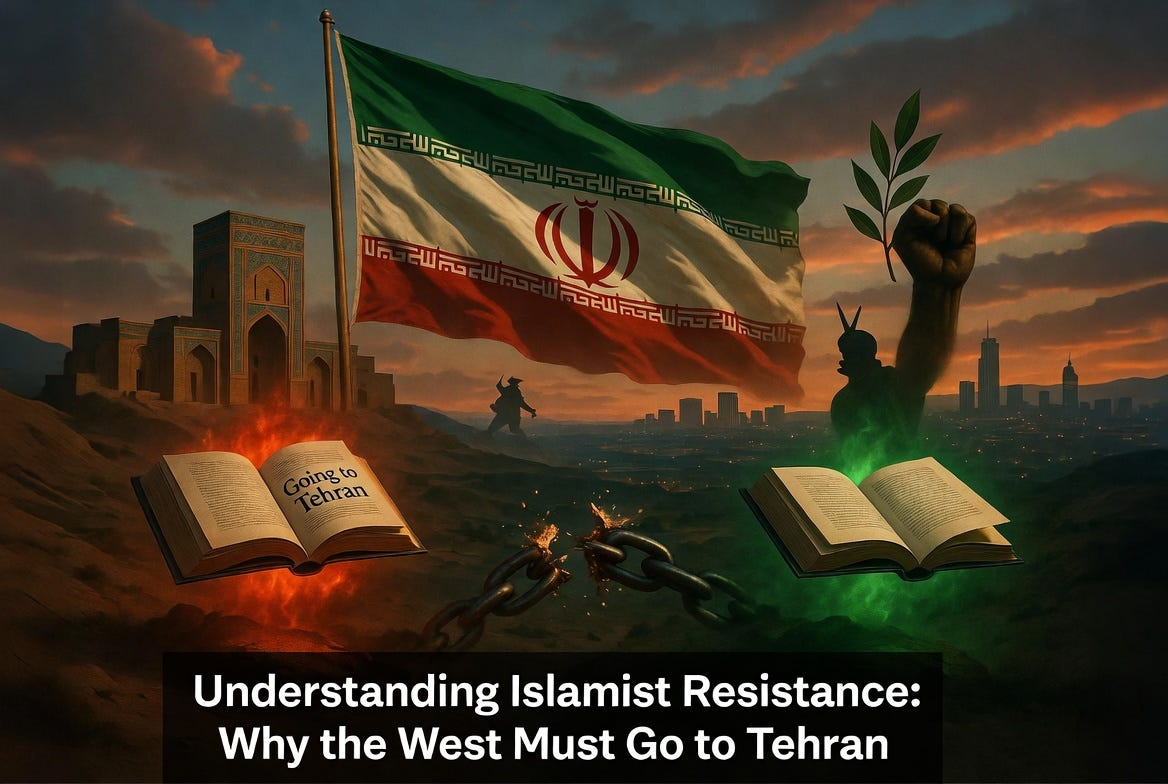
A Different Lens on the Middle East: Three Books That Challenge the West’s Failed Iran Policy
In an era defined by protracted Middle East conflicts — including the devastating war on the Palestinian population in Gaza since October 2023, Israel and the US’s unprovoked 11-day war of aggression against Iran in 2024, persistent Red Sea disruptions by Yemen’s Houthis aimed at pressuring Israel to end the genocide in Gaza, and the latest unprovoked and illegal war of aggression in 2026 by the United States and Israel against Iran — two insightful books offer a much-needed alternative to the cycle of confrontation and miscalculation, as well as to the flood of disinformation from partisan mainstream media or their conspicuous silence on some of the worst war crimes of this century.
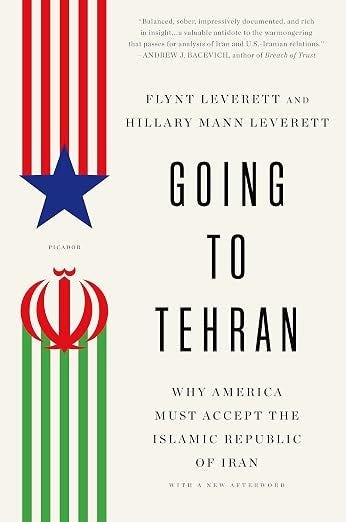
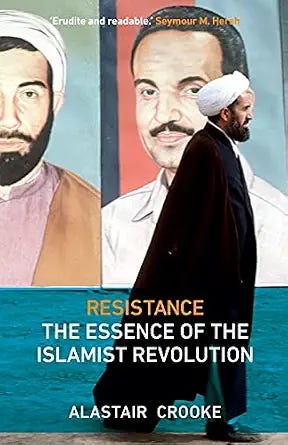
Flynt and Hillary Mann Leverett’s Going to Tehran: Why the United States Must Come to Terms with the Islamic Republic of Iran (2013) and Alastair Crooke’s Resistance: The Essence of the Islamist Revolution (2009) challenge the dominant Western narrative that frames Iran and aligned Islamist movements as irrational aberrations destined for collapse. Instead, they present a coherent picture of a resilient ideological and political phenomenon rooted in deep historical and cultural forces. Together, the books make a compelling case for strategic acceptance and diplomatic engagement as the only viable path forward.
In an era defined by protracted Middle East conflicts—including the devastating war on the Palestinian population in Gaza since October 2023, Israel’s and the United States’ unprovoked 11-day war of aggression against Iran in 2024, persistent Red Sea disruptions by Yemen’s Houthis aimed at pressuring Israel to end the genocide in Gaza, and the latest unprovoked and illegal war of aggression launched by the United States and Israel against Iran in 2026—three thought-provoking books offer a much-needed alternative to the cycle of confrontation and strategic miscalculation, as well as to the flood of disinformation from partisan mainstream media or its conspicuous silence regarding some of the worst war crimes of this century.
Flynt and Hillary Mann Leverett’s Going to Tehran: Why the United States Must Come to Terms with the Islamic Republic of Iran (2013), Alastair Crooke’s Resistance: The Essence of the Islamist Revolution (2009), and Ramin Mazaheri’s Socialism’s Ignored Success: Iranian Islamic Socialism (2020) each challenge dominant Western assumptions about Iran from a different perspective. The Leveretts argue that decades of sanctions, isolation, and regime-change policies have failed because they are based on a fundamental misunderstanding of the Islamic Republic’s resilience and strategic importance. Crooke explores the intellectual and civilizational roots of Islamist resistance, explaining why movements inspired by the Iranian Revolution have proved remarkably durable despite overwhelming military pressure. Mazaheri, more controversially, contends that post-1979 Iran has developed a distinctive model of Islamic socialism whose achievements and social foundations have been systematically overlooked or misrepresented in the West.
Taken together, these three books present a coherent picture of Iran not as an irrational or collapsing state, but as a resilient political and ideological project rooted in deep historical, cultural, and social forces. Although they differ in emphasis—strategic realism, ideological analysis, and political economy—they converge in challenging prevailing Western narratives and make a compelling case for replacing confrontation with a more realistic understanding of the Islamic Republic and its place in the emerging multipolar world.
The Strategic Imperative: Iran as Enduring Power
The Leveretts, drawing on years of high-level U.S. government experience in intelligence and diplomacy, deliver a rigorous policy critique grounded in realism. They argue that America’s post-1979 approach — characterized by sanctions, isolation, and regime-change fantasies — has been a comprehensive failure.
“Iran’s political order is not on the verge of collapse, [and] most Iranians still support the Islamic Republic,” they assert. Its government draws legitimacy from a blend of religious identity, nationalist pride, and resistance to external interference, factors that have sustained it through decades of pressure.
Central to their thesis is Iran’s indispensable regional role. As the most influential indigenous power in the Middle East, Iran shapes outcomes across Iraq, Syria, Lebanon, and the Gulf.
“Without some degree of rapprochement with Tehran, the U.S. will lose its strategic position in the Middle East, with disastrous consequences for U.S. global standing,” the Leveretts warn. They advocate a dramatic pivot: the United States should renounce failed policies and engage Iran comprehensively, mirroring Richard Nixon’s groundbreaking opening to Mao Zedong’s China in the 1970s. This “Nixonian moment” could realign relations and avert catastrophe.
Post-publication events have reinforced their analysis. Despite successive “maximum pressure” campaigns, targeted assassinations, and waves of sanctions, the Islamic Republic remains intact and has expanded its influence through the so-called Axis of Resistance. Iran’s support for Hezbollah, Hamas, Islamic Jihad, and the Houthis has enabled asymmetric challenges to U.S. allies and interests. The 2023–2025 Gaza war and subsequent regional escalations demonstrated the limits of military superiority against deeply motivated networks. Nuclear diplomacy remains stalled, while sanctions have inflicted economic hardship without breaking political will — exactly as the Leveretts predicted.
The Ideological Core: Resistance as Revolutionary Essence
Alastair Crooke, a former British diplomat and senior intelligence officer who was based for many years in Beirut, brings deep first-hand experience negotiating with Israel, Hamas and Hezbollah. He provides the book’s deeper intellectual and historical foundation. Resistance traces the “Islamist Revolution” from its origins in Egypt, through key intellectual centers like Najaf in Iraq, to its transformative success in Iran and its continuing manifestations today.
Crooke identifies resistance as the essential driving force. It transcends mere tactical military action and constitutes a civilizational response to Western hegemony, cultural imposition, and historical humiliation. Drawing on key thinkers — such as Sayyid Qutb of the Muslim Brotherhood, Ali Shariati in Iran, and Mohammad Baqir al-Sadr in Iraq — he shows how modern Islamist movements have reinterpreted Islam as a dynamic, forward-looking ideology capable of addressing contemporary challenges of justice, governance, and dignity.
Crooke emphasizes the ethical vision at the heart of this project. Referencing historian Karen Armstrong, he highlights the Prophet Muhammad’s emphasis on
“building a just community in which all of its members, even the most weak and vulnerable, were to be treated with absolute respect.”
This ideal stands in sharp contrast to what many Islamists see as the materialism and individualism of Western modernity. The result is “a mass mobilisation against the US-led Western project,” rooted in clashing systems of values that extend back over 500 years.
Unlike superficial analyses that reduce these movements to fanaticism or authoritarianism, Crooke portrays them as serious attempts to restore self-esteem and construct authentic alternatives. The 1979 Iranian Revolution remains the clearest example of this revolutionary potential, yet the same ethos extends to Lebanon’s Hezbollah, Palestinian resistance factions, and Yemen’s Houthis — all of which have shown remarkable endurance against superior firepower.
Crooke’s influential three-part Asia Times series, widely known as “How Hezbollah Won the War” (part 1, part 2, part 3), was one of the earliest and most incisive analyses of the 2006 Israel–Hezbollah conflict. Rather than framing Hezbollah’s performance as a conventional military victory, Crooke argued it achieved a strategic one by denying Israel its stated political and military objectives.
His central argument was straightforward: Hezbollah survived Israel’s offensive, preserved its command structure under intense bombardment, continued firing rockets until the ceasefire, and emerged with greatly enhanced political standing across the Arab world. In asymmetric warfare, Crooke contended, denying a stronger adversary its objectives can itself constitute victory.
He explained that Israel had entered the war expecting a short campaign in which air power would destroy Hezbollah’s infrastructure, suppress its rocket capability, and restore deterrence following the capture of two Israeli soldiers.
Instead, it confronted an organization that had spent years preparing: dispersed weapons caches, underground bunkers, decentralized fighting cells, redundant communications, and carefully prepared anti-tank positions. Hezbollah did not fight as a conventional army but as a resilient, networked force designed to absorb punishment and keep operating. Modern air power, Crooke noted, excels against fixed targets but is far less decisive against a concealed, adaptive adversary.
A second key theme was Hezbollah’s emergence as a hybrid force — blending guerrilla tactics with the discipline and capabilities of a regular military. Small, autonomous units exploited local terrain while operating under a coherent command structure. They defended prepared positions, sustained rocket barrages, and employed modern anti-tank guided missiles with notable effectiveness, repeatedly ambushing Israeli armored formations and challenging assumptions about the dominance of heavy armor.
For Crooke, the war’s broader significance lay in what it revealed about the evolving character of conflict. Non-state actors no longer needed to defeat advanced militaries on the battlefield; they only needed to outlast them politically and psychologically. Israel retained overwhelming military superiority, but the conflict demonstrated that such dominance does not automatically translate into political success. The result was a new form of mutual deterrence in which even a materially weaker actor could impose significant strategic constraints on a stronger state.
The series proved remarkably influential. It anticipated many of the concepts that would later dominate military and strategic studies — hybrid warfare, networked insurgencies, the limits of air power, and the critical distinction between tactical performance and strategic political outcomes. Far more than a mere account of the 2006 Lebanon War, “How Hezbollah Won the War” offered an early and enduring framework for understanding twenty-first-century asymmetric conflict.
Synthesis and Contemporary Relevance
When synthesized, the two books create a powerful realist framework. Crooke explains the why — the profound ideological and emotional wellsprings that give Islamist resistance its staying power. The Leveretts translate this into what must be done — pragmatic diplomacy that accepts the Islamic Republic as a legitimate and permanent actor rather than an existential threat to be eliminated.
This synthesis is particularly relevant amid the realities of 2026. Public opinion in many Western countries has shifted toward growing criticism of Israel’s cruel genocidal conduct in Gaza and southern Lebanon, yet elite policy remains largely unchanged. Iran has deepened its ties with Russia and China, while resistance networks continue to challenge the status quo. Sanctions and military pressure have failed to dismantle the Axis of Resistance; instead, they have often strengthened its narrative of defiance. As Crooke warned, ignoring the intellectual traditions behind these movements leads to perpetual strategic miscalculation. As the Leveretts demonstrated, demanding subordination while underestimating their resilience produces repeated failures.
Critics of this approach argue that it downplays human rights concerns and alleged authoritarian tendencies by Iran and its partners. The authors do not dismiss these issues entirely but insist that effective policy must begin with an accurate assessment of realities on the ground rather than wishful thinking.
Is the Islamic Republic a Socialist Republic?
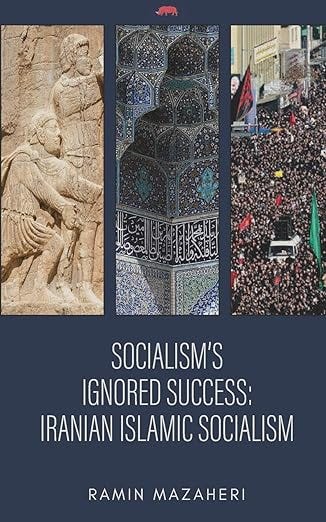
A third book, more controversial but nevertheless thought-provoking, is Socialism’s Ignored Success: Iranian Islamic Socialism (2020) by Ramin Mazaheri. Whereas the Leveretts focus on strategic realism and Crooke on the ideological foundations of Islamist resistance, Mazaheri advances a broader and more ambitious claim: that post-1979 Iran has developed and sustained a distinctive and successful model of “Iranian Islamic Socialism” which Western governments, media, and commentators have largely ignored or misrepresented.
His central arguments are that:
- Iran has created a genuinely socialist system rooted in Islamic principles of justice, anti-imperialism, and redistribution, combining Shia Islamic values with socialist-inspired economic and political institutions. According to Mazaheri, this synthesis is not contradictory but represents a coherent alternative to both Western capitalism and atheistic Marxism.
- The Islamic Republic has achieved significant successes in areas such as social welfare, resistance to foreign intervention—particularly from the United States and Israel—economic resilience through institutions such as the bonyads and IRGC-linked organizations, and the preservation of national sovereignty despite decades of sanctions and international isolation. Mazaheri contends that Iran is “on the vanguard of many modern achievements” in both human and social development.
- Western portrayals of Iran, he argues, obscure these accomplishments by reducing the country to narratives of theocracy, authoritarianism, or failure while overlooking what he sees as its egalitarian and anti-imperialist dimensions. The book, which collects many of his essays and articles, seeks to challenge prevailing perceptions and present Iran as a distinctive civilization deserving of serious engagement rather than caricature.
Mazaheri, a journalist frequently associated with Press TV, ultimately argues that Iran demonstrates the compatibility of socialism and religion—specifically Islam—and offers a model from which other countries could learn. Critics, particularly on the secular left, counter that the book functions more as nationalist or Shia populist advocacy for the Islamic Republic than as a rigorous analysis of socialism. Nevertheless, the book’s central thesis is clear: Iran’s post-revolutionary political economy represents an overlooked and misunderstood example of Islamic socialism in practice.
Toward a New Realism
Taken together, these three books challenge many of the assumptions that have shaped Western policy toward Iran for more than four decades. While differing in emphasis—the Leveretts on geopolitics, Crooke on ideology, and Mazaheri on political economy—they converge on a common conclusion: the Islamic Republic is neither a temporary aberration nor a state whose collapse can be engineered through sanctions, military pressure, or diplomatic isolation.
A wiser policy would involve several elements: abandoning unrealistic regime-change objectives; pursuing comprehensive negotiations that address mutual security concerns, including those surrounding Israel’s and Iran’s nuclear programmes; and recognizing the cultural and ideological legitimacy that resistance narratives hold for millions across the region. Engagement does not require endorsement of every policy or practice of the Islamic Republic. Rather, it requires replacing ideological preconceptions with strategic realism in an increasingly multipolar world where non-Western powers and alternative political models carry growing influence.
The alternative is bleak: continued costly conflicts, further erosion of Western credibility, and the strengthening of hardliners on all sides. As the Leveretts argue, America must ultimately “go to Tehran” if it hopes to secure its interests and avoid strategic failure. Crooke provides the deeper context by explaining why Islamist resistance has proven so resilient, while Mazaheri offers a provocative interpretation of the social and economic foundations that, in his view, have enabled the Islamic Republic to endure despite extraordinary external pressure.
Whether one agrees with all of their conclusions or not, these authors invite readers to reconsider prevailing assumptions about Iran and the wider Middle East. At a time when decades of confrontation have yielded neither stability nor peace, that challenge is perhaps more relevant than ever.
In the end, all three books remind us that effective policy begins with an accurate understanding of reality rather than ideological wishful thinking. In the volatile Middle East of 2026, the questions they raise—and the debates they provoke—are more timely than ever.