
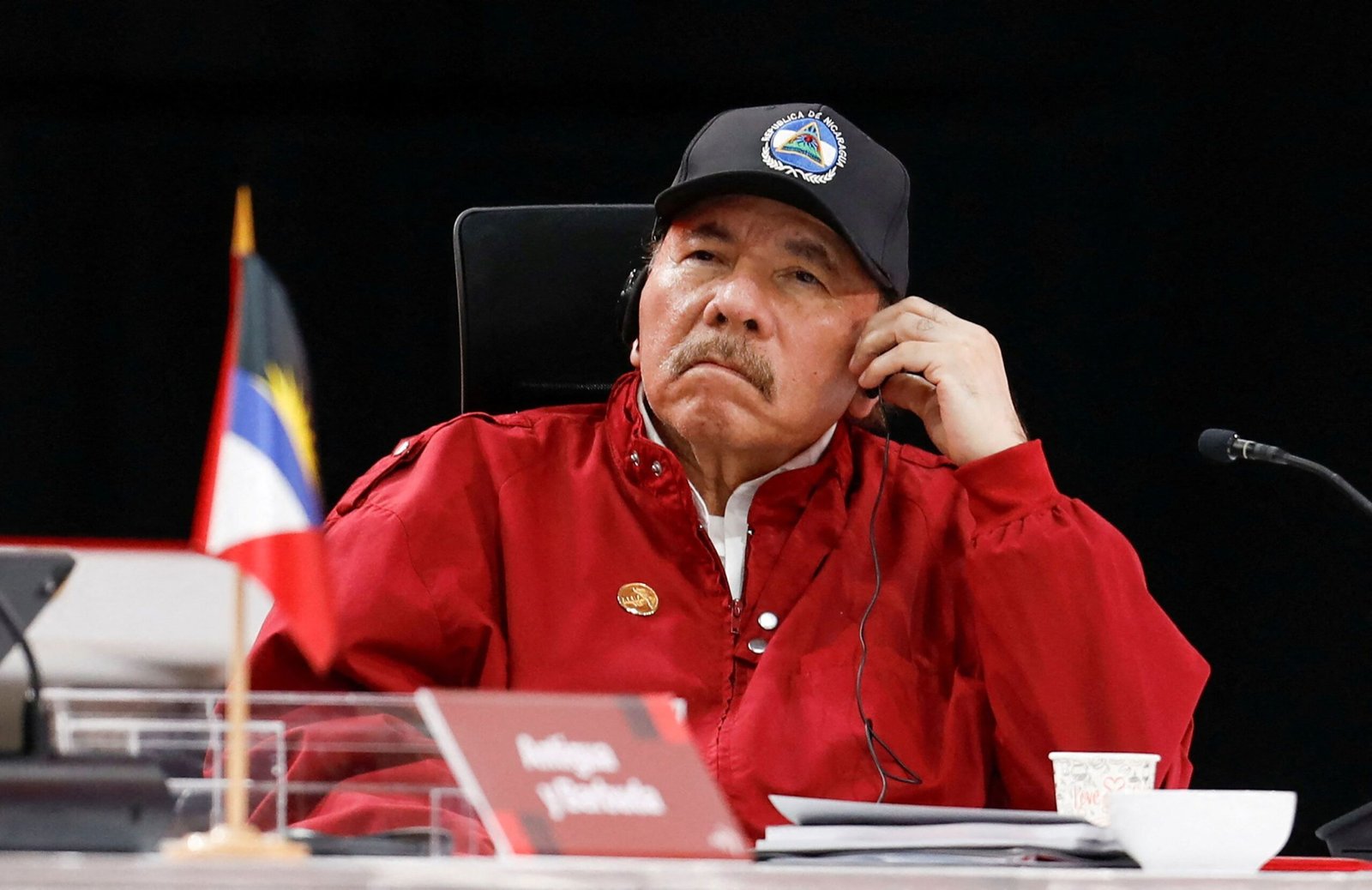
Nicaragua cancelling elections has been presented in much of the international media as another example of a revolutionary government abandoning democracy. The image created is of a country turning away from political freedom and moving towards authoritarian rule. Yet for supporters of the Sandinista movement, this interpretation ignores the history that created modern Nicaragua in the first place. They argue that Nicaragua is not operating in normal political conditions, but is instead a revolutionary state that has spent decades facing external pressure, intervention and attempts to reshape its political direction from foreign players – principally the United States.
To understand why the Sandinista government has taken this decision, one has to look beyond the immediate controversy and examine the history of Nicaragua itself. Few countries in Latin America have been shaped so heavily by the relationship between revolution and foreign influence. From the US occupations of the early twentieth century, to the rise of Augusto César Sandino, to the 1979 revolution and the Contra War (https://webhelper.brown.edu/cheit/Understanding_the_Iran_Contra_Affair/n-contras.php), Nicaragua’s political identity has been built around the question of sovereignty.
The Sandinista argument is that a country cannot be considered truly independent if its political system can be manipulated by outside powers. From this perspective, cancelling elections is not an abandonment of democracy but a defensive measure designed to protect a revolutionary process that has repeatedly faced attempts at removal.
A Revolution Born From Resistance
The origins of modern Nicaragua lie in the struggle against the Somoza dynasty, a family that dominated the country for decades and maintained close relations with the United States. For many Nicaraguans, Somoza represented not only domestic inequality but also a political system where foreign interests held enormous influence over the country’s future.
The Sandinista National Liberation Front took its name from Augusto César Sandino, the nationalist leader who fought against US military intervention in Nicaragua during the 1920s. Although Sandino was assassinated before the revolution that carried his name, his image became a symbol of resistance and national independence.
When the Sandinistas overthrew Anastasio Somoza in 1979, they presented the revolution as the liberation of Nicaragua from decades of dictatorship and foreign domination. The new government introduced major social programmes, including literacy campaigns, expanded healthcare and land reforms. These reforms were of course popular in Nicaragua, but were feared in the US.
However, the timing of the revolution meant that Nicaragua immediately became part of the wider Cold War struggle. A revolutionary government in Central America with close ties to Cubathe Soviet Union, and North Korea (link) was unacceptable to Washington, which viewed the Sandinistas as a strategic threat.
The United States responded by supporting the Contra forces, an armed movement seeking to remove the Sandinista government. The Sandinistas and many of their supporters viewed the Contras as an illegal foreign-backed attempt to destroy the revolution, while Washington argued that it was supporting opposition forces against a government it considered hostile.
The resulting war devastated Nicaragua. The country suffered enormous economic damage, thousands of people were killed and an entire generation grew up under the shadow of conflict. The International Court of Justice later ruled that the United States had violated international law through actions against Nicaragua, including support for the Contras, although Washington rejected the ruling.
For the Sandinistas, this period created a lasting belief that revolutionary governments in Latin America cannot simply assume that elections alone will protect them from outside intervention.
Latin America And The History Of Intervention
The Nicaraguan perspective is shaped by a wider history of US involvement in Latin America. Supporters of the Sandinistas argue that Nicaragua was not an isolated case, but part of a broader pattern where governments challenging established economic and political interests faced pressure from Washington.
In Guatemala, the government of Jacobo Árbenz was overthrown in 1954 after attempting reforms that challenged powerful economic interests. The CIA supported the operation, which removed a government that had attempted land reforms and introduced policies opposed by sections of the country’s elite.
Chile remains another major example cited by the Latin American left. Salvador Allende’s socialist government was elected democratically in 1970 and attempted major economic reforms, including nationalisation of key industries. After years of political conflict, Allende was overthrown in a military coup in 1973. The United States had opposed his government and supported efforts to weaken his administration before the coup.
For left wing movements across Latin America, these events demonstrate a recurring struggle between governments seeking greater independence and a powerful neighbour determined to protect its influence.
Cuba remains the most enduring example. Since the 1959 revolution, Havana has faced decades of US sanctions, diplomatic isolation and attempts to undermine the revolutionary government. The failed Bay of Pigs invasion remains one of the most famous examples of a direct attempt to remove a socialist government in the region.
From the Sandinista perspective, these examples are not simply historical events. They are evidence that revolutionary governments in Latin America operate under conditions very different from those faced by ordinary political systems.
Venezuela, Bolivia And The Modern Struggle
The same historical argument is applied by Nicaragua’s supporters to modern Latin America, particularly Venezuela and Bolivia. In Venezuela, the Maduro government has repeatedly accused the United States of attempting regime change. When Washington recognised Juan Guaidó as interim president in 2019, Caracas and its allies argued that this represented an attempt to remove a sovereign government through external pressure.
The United States argued that it was responding to what it considered an illegitimate political process and supporting democratic change. However, for Nicaragua and other governments aligned with Venezuela, the episode reinforced the belief that revolutionary governments remain vulnerable to outside intervention.
Bolivia is also frequently discussed by the Latin American left. Supporters of Evo Morales described his removal in 2019 as a coup against a progressive indigenous government, while opponents argued that it followed a disputed election and a domestic political crisis. For Nicaragua, however, the broader lesson was that governments which challenge established power structures can find themselves facing intense pressure.
This is why the Sandinista government argues that political survival requires strength. In its view, allowing external actors to influence domestic politics would repeat the same mistakes that have shaped Latin American history for generations.
Revolution, Sovereignty And The Future Of Nicaragua
Nicaragua is not a communist country. Its economy is a mixed market economy, with private businesses, foreign investment and normal consumer life. However, politically it remains a revolutionary state that defines itself through the history of the Sandinista movement.
Supporters argue that the purpose of cancelling elections is not to abandon the people of Nicaragua, but to defend the gains of the revolution against forces they believe have repeatedly attempted to reverse them. They see the country as being engaged in a continuing struggle for sovereignty rather than simply participating in a normal political competition.
Critics will continue to argue that cancelling elections reduces political choice and weakens democratic institutions. But was there really any “democracy” in the shadow of US funding and right-wing political interests?
For the Sandinistas, Nicaragua’s decision is therefore not about rejecting politics. It is about protecting a political project that they believe has spent decades fighting for the right of Nicaragua to determine its own future.
That is the central argument behind the decision: a revolution which does not defend itself is a revolution that will eventually disappear and that is why the real global left, not the woke apologists should support this move, at least for as long as Nicaragua and all left-wing movements remain under siege.